Midwives: Offering Personalized Care Throughout a Lifetime

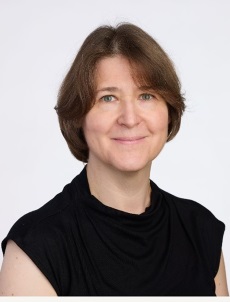
Grace Ferguson-Pell, CNM, WHNP, RN

It is a common misconception that midwives provide only natural childbirth or pregnancy services. In fact, all New York State licensed midwives, both Certified Midwives and Certified Nurse Midwives, offer a unique brand of care throughout a patient’s lifetime, from adolescence to post-menopausal years.

“A midwife is an independent practitioner who focuses on reproductive health,” says Grace Ferguson-Pell, CNM, WHNP, RN, a certified nurse midwife at the Midwife Practice at Mount Sinai Doctors at Delancey Street, in Manhattan’s Lower East Side.  “And many Mount Sinai patients who are pregnant and at low to moderate risk choose to be cared for by a licensed midwife.”

Midwives provide a wide range of care, including:

  • Contraceptive counseling
  • Menstrual cycle issues
  • Prenatal care
  • Attending births
  • Postpartum visits
  • Annual reproductive health exams like cervical cancer screening and testing for sexually transmitted diseases

Lesley Cohen, CNM, MSN, MPH

Midwives also support patients through menopause and perimenopause, providing ongoing reproductive health services such as screenings, symptom management, and education.

They also focus on providing care for the individual.

“Certified Nurse Midwives are clinically trained in the full scope OB/GYN, but their nursing background brings a depth of empathy and compassion to their care delivery,” says Lesley Cohen, CNM, MSN, MPH, a certified nurse midwife at Mount Sinai West.

“In general, we view health from a wellness perspective,” she says. “This allows me to create strong relationships and truly connect with the patients in my care.”

By developing a mutual understanding with patients, Ms. Cohen strives to make them feel comfortable and at ease, which means patients will be more open about their health and any concerns.

Gail Rivera, MSN, CNM

Gail Rivera, MSN, CNM, a certified nurse midwife at The Mount Sinai Hospital, says midwifery care places a focus on wellness that positions the patient at the center of decision-making.

“Midwives turn the medical approach from illness to optimal health,” she says. “We focus on the natural processes of pregnancy, labor, delivery, and breastfeeding using medical interventions as needed.”

A midwife for more than 30 years, she has worked in a variety of settings, including at a birth center, at home, and at high-risk labor and delivery units.

“I know from experience how critical it is to engage patients,” she says. “I come from a humble background and am a bilingual Afro-Latina woman,” she says. “I have seen how important cultural connections can be in establishing a good, trusting relationship with a patient.”

Suzanne Ricca-Hinchey, CNM, MS

Suzanne Ricca-Hinchey, CNM, MS, a certified nurse midwife at The Mount Sinai Hospital, says she ensures she provides patients with personalized care.

“Our training requires us to be present, connect, and overall to educate,” she says. “We follow the same accepted standards of all professionals, with the focus of individualizing our care to consider the unique situation of each patient.”

Ms. Ricca-Hinchey is passionate about the opportunity to guide patients into motherhood.

“Birth can be messy and overwhelming,” she says. “Birth can also be calm and transformational. It’s always unpredictable. New parents deserve to feel strong and empowered so they can properly nurture and protect the next generation. If I have my hands in accomplishing this, I have done my job.”

Ms. Ricca-Hinchey keeps a photo taped to the inside of her locker that was given to her by a patient in her labor room following delivery.

“Looking at this photo reminds me that I am part of the story for this family, and for every family I assist in labor and birth,” she says. “It reminds me to remain purposeful in my words and interactions because it shapes the experience, and it will all be repeated when the story is told.”

A Journey of Firsts at the White Coat Ceremony

For the class of 2029 of the Icahn School of Medicine at Mount Sinai, the White Coat Ceremony marked the start of their medical careers. It was also an opportunity for Mount Sinai staff and faculty to pass on their wisdom about what it means to be on that path.

“As students, it represents the privilege you have earned to study medicine,” said Eric J. Nestler, MD, PhD, Interim Dean of the Icahn School, speaking to the crowd at Alice Tully Hall at Lincoln Center on Tuesday, September 16. “As practitioners, it will be a constant reminder of your sacred responsibility to patients. And to your patients, it will symbolize the deep trust that they place in you,” he said.

Incidentally, remarked Dr. Nestler, just as the event was the first White Coat Ceremony for the incoming class, it was also the first that he had presided over as Interim Dean since assuming the role last year. The incoming class is a diverse group from different socioeconomic, ethnic, and religious backgrounds, with representation from 31 states, 52 different schools, and two who joined from the military. Collectively, class members speak more than 20 different languages.

The new students are stepping into a world that will contain many firsts for diagnosing and treating patients, led by artificial intelligence and genomic sciences, and Dr. Nestler said it will be a world unrecognizable to himself, his peers, and his mentors: “You are preparing to join our profession as it faces a revolutionary inflection point.”

But behind the prestige and brilliance, doctors must remember that they, too, are human, said Brendan G. Carr, MD, MA, MS, Chief Executive Officer and Kenneth L. Davis, MD, Distinguished Chair of the Mount Sinai Health System.

“The point is that medicine will take a toll. And we used to celebrate that. But we don’t anymore,” said Dr. Carr. “We don’t want the numb version of you. We want the version of you that feels deeply and sees the connection you have with your patients. And we want the professional version that commands authority and respect and is polished and professional.”

Class of 2029, By the Numbers

128

Class size

7,529

Number of traditional entry applications

54%

Percentage of women

18

First-generation college students

519

Median MCAT score of class

3.94

Median GPA of class

The class of 2029 is entering medicine with a vision for shaping the future. Click on each student’s name to learn more about why they chose to enter the field and the impact they hope to achieve.

Jude Barakat, Class of 2029

Why did you choose to enter medicine?

I chose to enter medicine after seeing my mom battle her diagnosis with her rare autoimmune disorder, scleroderma. With such a complicated diagnosis, we visited tons of physicians and physician-scientists, where I saw first-hand the impact of their discoveries. Over years, these professionals gave me the invaluable gift of long hikes with my mom and celebrating life milestones—like this White Coat Ceremony—by her side. I hope to do the same for others through my pursuit of science and medicine.

What do you see as gaps that exist in medicine, and how do you think you can help bridge that gap?

I observe a disconnect between scientific research and clinical practice. It’s not only important to pursue our scientific curiosity, but to ground that research and inquiry in advancing care for our patients. In pursuit of my physician-scientist training, I hope to help bridge the gap, speaking both a scientific and medical language to improve human health for my patients and on a larger scale.

What drew you to the Icahn School of Medicine?

As an MD/PhD student, I appreciated that the “bench-to-bedside” translational research model is baked into the very nature of Mount Sinai as both a hospital system and a powerhouse in biomedical research. Beyond the lab, I instantly felt the supportive and collaborative atmosphere from the students and faculty the moment I entered Second Look, the event for accepted students to learn more about the program. Plus, Mount Sinai has the best location of any medical school in the world: next to Central Park and a train ride away from any action of New York.

Interesting facts about yourself?

When not doing science or medicine, I love to watch reality TV—specifically Survivor; I even minored in psychology to study social behavior and dynamics. A life goal of mine is to be on Survivor… maybe during grad school?


I am a medical student and so much more. I’m also… an educator and mentor.

Cesar Espinal, Class of 2029

Why did you choose to enter medicine?

I chose to enter medicine because this field will allow me to have an impact on someone’s life during their most vulnerable moments. Having seen how my own life and the lives of my loved ones have benefited through the efforts of compassionate health care workers, I feel both a deep desire and responsibility to provide that same care for others. Whether it’s through a clinical intervention or just being there to listen, I know that my actions as a physician will have the potential to be life-changing. The white coat bestowed upon me symbolizes not just knowledge, but a commitment to consistently honor the privilege of being relied upon to do what is best for my future patients. With every step I take toward honoring that trust, I find myself living out the very reasons I chose this path.

What do you see as gaps that exist in medicine, and how do you think you can help bridge that gap?

A major gap I see in medicine is the lack of adequate language access for patients with limited English proficiency. Through my experience researching language access in New York City public hospitals, I have become aware of the fact that patients who don’t share a common language with their care team often struggle to fully understand their care, and relying on telephonic or video interpreters can make it even harder to feel truly connected and comfortable.

Now, as a medical student, I am grateful to take a more active part in addressing them as a Spanish interpreter at the East Harlem Health Outreach Partnership, where I hope to serve as both a language and cultural bridge between patients and providers. Through work like this, I hope to grow into a physician who not only recognizes these invisible barriers but also becomes more mindful of how to better connect with patients whose languages I do not speak.

What drew you to the Icahn School of Medicine?

I was initially drawn to the Icahn School of Medicine because of the FlexMed program, which allowed me to live in Spain and Argentina to strengthen my fluency in Spanish—it’s my heritage language that I didn’t grow up speaking, even though my mum is from Mexico, and my dad is from the Dominican Republic. During those years, I also conducted research at NYU Langone, Bellevue Hospital, and the Columbia University Mailman School of Public Health, examining language access and minority health in hospitals serving largely Hispanic communities across New York City.

Now, I hope to bring these skills and experiences back to East Harlem by serving the vast Hispanic patient population that comes to Mount Sinai for care. Access to such a community has always been central to where I envision practicing medicine, as I strive to bridge language gaps for the community I come from but could not always fully connect with. Achieving this dream has only been possible because of the Icahn School of Medicine, which gave me the foundation I needed to serve this community today.

Interesting facts about yourself?

I’ve traveled to five continents and I’ve lived in four. But more impressively, I can solve a Rubik’s cube in 17 seconds.


I am a medical student and so much more. I’m also… a runner, a cyclist, and hopefully a future triathlete.

Eva Ingber, Class of 2029

Why did you choose to enter medicine?

I was an avid reader as a teen, deeply stirred by the works I read, such that I often thought to myself: I want to do this. At the time, I thought “this” meant that I strictly wanted to be a writer, a storyteller. Over time, I learned what it was that truly inspired me: I wanted to touch people’s lives the way books touched mine. Over time, this same feeling—coupled with an ever-growing interest in science, a craving for interpersonal connection, and a firm belief that actions often speak louder than words—led me to the realization that I didn’t just want to write people’s stories, I wanted to take an active part in shaping them. This desire was cemented the summer before my senior year of high school, when I had my first shadowing experience. I witnessed a J–pouch procedure, and the surgeon had me hold the freshly removed colon.

I often think back to that moment, to the emotions I felt all at once: disbelief that I was holding a part of the human body, deep sadness for the patient who just lost an organ and whose life would be forever changed, but also reverence for the ingenuity of medicine. I have been privileged to witness cutting-edge procedures, but my reverence of medicine is equally attributable to the littlest moments I’ve seen: a resident holding a hysterectomy patient’s hand as she awoke from surgery, a physician delicately fixing the gown of an anesthetized patient for privacy, an entire operating room of staff singing Bob Marley’s “Three Little Birds” for a patient as she drifted to sleep. The stimulation and connection I’ve sought on the page are everywhere in the hospital. I am inspired and deeply moved by the humanness of medicine, a field that is a constant reminder of the paradoxical duality of our existence: we are flesh and bone, and we possess such awesome potential.

What do you see as gaps that exist in medicine, and how do you think you can help bridge that gap?

I have observed—both in the clinical space, amongst my peers, and during my own experiences as a patient—the helplessness that can arise in the moments after leaving a physician’s care. A patient can be given instructions but face frustrating and confusing obstacles in trying to complete them. I feel that the onus of navigating these next logistical steps should not fall squarely on a patient’s shoulders. The logistic and circumstantial barriers to care can be mitigated by more physicians not only telling patients what their next steps should be, but how they can accomplish them.

This clarity might be as simple as affirming for a patient that their office will handle filling the prescription or that they will take care of reaching out to pathology to receive the necessary slides. I hope that every patient I am privileged to treat not only feels cared for in my presence, but leaves with this same feeling, empowered and confident in their understanding of their health and how to continue protecting it.

What drew you to the Icahn School of Medicine?

As a volunteer researcher at Mount Sinai during my undergraduate years, I would walk into the Annenberg Building and be surrounded by the vibrancy of Mount Sinai—doctors and nurses in scrubs running to grab lunch between shifts, families coming to visit loved ones, researchers carrying samples on ice, cleaning staff making sure that the hospital shines, and delivery people bringing essential goods to their respective locations.

I’ve seen firsthand the unique paradox of the Mount Sinai community: that despite its large size, its magnitude of accomplishments, Mount Sinai has created and cultivated warmth and intimacy across the institution in a way that is palpable. From the new ASCEND curriculum that breathes life into the facts and goes beyond lecture learning, to the cutting-edge research and clinical opportunities that come from the immersiveness of a medical school that’s part of a hospital, to the equitable model of care and emphasis on the dynamic role of physicians, I am inspired by the way the Icahn School of Medicine teaches and practices the art of medicine. I wanted to attend a medical school that, like me, believes care goes beyond a diagnosis—and I know with absolute certainty that Mount Sinai is that school.

Interesting facts about yourself?

I was in a rock band growing up. I was the lead singer!


I am a medical student and so much more. I’m also… daughter, sister, granddaughter, wife, writer, reader, artist, lover of music (anything from Frank Sinatra to Taylor Swift), and an exercise aficionado.

Rahmah Jingo, Class of 2029

Why did you choose to enter medicine?

I have felt a calling to medicine for as long as I can remember. My dad is an internist, and as a kid, my favorite days were going with him to work. I loved seeing my dad share the understanding and caring side of himself that I loved so much with his patients. This was my earliest insight into how special the physician-patient relationship truly is. I grew older and pursued patient-facing experience by volunteering as an EMT and working at an urgent care facility. I learned to anticipate and respond to my patients’ needs, and I built meaningful relationships grounded in compassion and trust during moments of vulnerability. My work gave me the clarity to recognize my purpose: to pursue the clinical training and scientific knowledge that would best equip me to meet others’ health needs. I chose medicine knowing it is a privilege to wake up every day with the opportunity to make a meaningful difference in the lives of others.

What do you see as gaps that exist in medicine, and how do you think you can help bridge that gap?

There are an overwhelming number of issues that come to mind. Limitations exist in structural barriers to care, workforce burnout, policy changes, health care costs—to name a few. In pursuing a medical career, I have considered the way being a physician would put me in a unique position for advocacy that leads to widespread policy changes. I’ve seen how practicing medicine informs research that uncovers clinically relevant solutions to address such gaps. However, I am but one individual, still uncovering where medicine will ultimately take me. At this stage, I know the most important thing I can do is hold hope for a better future. Hope allows us to imagine what a better future looks like, and from that imagination, tangible and necessary action may arise.

What drew you to the Icahn School of Medicine?

I attended a medical conference early in my undergraduate career when I first met students from the Icahn School of Medicine. It was very easy to see myself attending this school; I saw a bit of myself in the students I met. I made sure to ask the “hard” questions about life as a medical student, and left with the feeling that I would be well-supported and welcomed by this institution. I got the sense that the values the Icahn School upholds aligned extremely well with my own. I wanted to be in a school that centers the patients, the greater community around us, and the pursuit of science. All of those factors gave me confidence that I would fully step into my potential as a doctor by attending the Icahn School.

Interesting facts about yourself?

For middle and high school, I went to international schools in my hometown, Atlanta, Georgia, and in Kampala, Uganda. Because of that, I have made lifelong friends from many different places around the world.


I am a medical student and so much more. I’m also… a daughter, a sister, and a friend. I’m also a person who commits herself to too many hobbies!

Beyond the Scalpel, Learning About Humanities in Medicine

From left to right: Alexis Hatch, MD student and organizer of the Two-Minute Talks in the Medical Humanities; Suzanne Garfinkle, MD, Director, Academy for Medicine and the Humanities; and Jacob Appel, MD, JD, MPH, Assistant Director, Academy for Medicine and the Humanities.

Training to be a researcher or physician at the Icahn School of Medicine at Mount Sinai isn’t just about excellence at the bench and bedside but also understanding the humanity that underpins these callings.

Thus exists the field of “medical humanities,” an area of study that draws upon the arts, the humanities, and the social sciences to enhance medical practice. On Thursday, September 18, members from the Mount Sinai Health System were invited to share and learn about topics where humanities and medicine intersect at the inaugural Two-Minute Talks in Medical Humanities.

With just 120 seconds each, 18 presenters—spanning faculty members, medical students, master’s students, and PhD students—covered topics they were passionate about: Where did Leonardo da Vinci think the soul was located in the body? How has the medical stretcher evolved through time? Can listening to Indian classical music have therapeutic effects?

“As a student admitted through Flex Med, a program designed to bring students in the humanities into medicine, I know firsthand how valuable a humanities background is when learning how to be a compassionate physician,” said Alexis Hatch, a second-year MD student, who came up with the idea for the event.

The inspiration for Two-Minute Talks came from Ms. Hatch’s time as an undergraduate at the University of Chicago, where she participated in a similar event. “When I started as a student ambassador for the Academy for Medicine and the Humanities at the Icahn School of Medicine, I immediately thought a similar event would draw students and faculty to share their interests outside of clinical medicine or research,” she said. “I knew the interest was there—every time I shadowed a physician, they seemed much more interested in discussing my history degree than any scientific research I did!”

“We loved the idea because you can teach an audience a great deal in two minutes, and the time limit made each talk extra dynamic,” said Suzanne Garfinkle, MD, Founding Director of the Academy, and Assistant Clinical Professor of Medical Education. “The event offered a very special window into participants’ creative and scholarly passions. I could see these two-minute lectures developing into a real Mount Sinai tradition.”

Take a look at what some of the presenters talked about during the event in the slideshow below.

Alexis Hatch, medical student and organizer of the Two-Minute Talks in Medical Humanities, gave a presentation on things that exist today thanks to the existence of tuberculosis.
In addition to tuberculosis camp towns—the roots of places like Colorado Springs, Colorado, and Pasadena, California—Stetson hats and the fictional character Sherlock Holmes had origins relating to the disease. For the latter, author and physician Arthur Conan Doyle based Sherlock Holmes’ deductive reasoning traits on the methods he used to debunk a failed tuberculosis remedy at the time.
Jeffrey Laitman, PhD, Distinguished Professor of Medical Education, talked about Leonardo da Vinci’s search for where the soul is located in the body anatomically.
Leonardo da Vinci, said Dr. Laitman, was obsessed with the human skull, and searched for the “senso commune,” which he thought was where the soul was located. The polymath thought he had found its location: at the floor of the third ventricle, just superior to the pituitary fossa.
Vasundhara Singh, MD, Associate Professor of Medicine (Hospital Medicine), and Medical Education, elaborated on the history of the medical stretcher. “Why do I care about stretchers? Because I spend half my time bent over them,” she said.
The earliest stretchers date back more than 150 years, and were also called “ambulances.” Over the decades, stretcher designs were informed by wartime constraints for space, and eventually paid more attention to comfort and materials, said Dr. Singh.
Some spiritual healing retreats in “hot igloos” in Mexico promoted on social media are simply co-opted traditional birthing huts, said Jaime Gonzalez, medical student, who talked about indigenous Mexican birthing practices.
Giving birth in hot houses is still practiced in parts of Mexico. Culture and tourism might have been intertwined, but it important for tourists to be mindful of the origins of some of these practices, said Mr. Gonzalez.
Enna Selmanovic, PhD candidate, spoke about brain donation law and representation in the United States.
Brain donation has the potential to greatly advance understanding of human disease but is complicated by law, culture, family dynamics, and ethics. “These choices shape the stories that medicine tells us about disease, and whose medical history is left out,” said Ms. Selmanovic.

Bridging Cultures in Medicine: A Mount Sinai Student’s Time at Dhulikhel Hospital in Nepal

Sunset view from a valley hike

As a fourth-year medical student at the Icahn School of Medicine at Mount Sinai, I spent one month in February in Nepal for my clinical elective. This experience was humbling, challenging, and deeply meaningful, undoubtedly shaping my career in medicine.

The Role of Family and Spirituality in Patient Care

I split my time between the pediatric and psychiatry departments at Dhulikhel Hospital, each offering a unique lens into health care delivery in a resource-limited setting. One of the most striking differences I observed, particularly in psychiatry, was the active role of family members in patient care even within the secure psychiatric unit.

Unlike in the United States, family members in Nepal were allowed to remain with patients throughout the entire day. I witnessed firsthand how this level of involvement improved patient outcomes, elevated morale, and deepened the family’s understanding of mental illness. While one might assume this model could compromise safety, staff reported surprisingly few security issues.

Another aspect that stood out to me was the integration of religious and spiritual beliefs into psychiatric treatment. Religion was one of the strongest protective factors for patients experiencing depression, making it imperative for providers to build upon those beliefs to create a safety plan for patients. It was a powerful reminder of the impact of culture on medical treatment and patient-provider trust, a factor often overlooked in medicine in the United States.

The view of Kathmandu from the top of Swayambhunath Temple

Engaging With Nepali Culture

Outside of the hospital, we experienced Nepali culture in countless meaningful ways. Each afternoon, we ate traditional meals like momos, a type of dumpling, and thalis, a variety of dishes served together on a single platter, at small canteens and cafes near the hospital. We visited historic temples and witnessed funeral processions and religious rituals along the Bagmati River. Observing these ceremonies was particularly moving as we were able to see how spirituality, grief, and community are such a visible part of everyday life.

Each evening, we hiked along trails adjacent to small huts, farms, and croplands. This was one of the most peaceful ways to spend the close of the day, among the sounds of the birds, goats, and dogs that would follow us deep into the valley.

The Impact of International Exchange

My time in Nepal was truly inspiring not just within the hospital but also through meeting incredibly caring people and experiencing delicious food and breathtaking nature. It was a privilege to experience both the medical and cultural aspects of the country. I hope to visit again one day as a physician!

Author Salonee Shah, MD, right, shown with Abhi Mogili and Cecilia Katzenstein. They are recent graduates of the Icahn School of Medicine at Mount Sinai. Dr. Shah completed her clinical elective at AMPATH Nepal through funding provided by the Arnhold Institute for Global Health at Mount Sinai. She is a psychiatry resident at Baylor College of Medicine in Houston and plans to pursue a child and adolescent psychiatry fellowship. Her goal is to eventually work with refugee and immigrant families in trauma-focused care.

Your Guide to the Latest Trends in Breast Cancer Prevention and Treatment

Breast cancer remains one of the most prevalent cancers among women, with 13 percent of women—approximately one in eight—receiving a diagnosis in their lifetime. Early detection and advanced technology are vital to improving survival rates and treatment success.

Mount Sinai offers mammography screening and excellent care at numerous locations in New York City and the surrounding suburbs. Click here for information about screening locations and making an appointment.

Here are three important ways that updates in breast cancer screening and technology have the potential to significantly improve early detection, according to the experts at the Center of Excellence for Breast Cancer at The Tisch Cancer Institute at Mount Sinai.

Elisa Port, MD, FACS

New Mammogram Guidelines

In 2024, the U.S. Preventive Services Task Force recommended that women begin regular mammograms at age 40, shifting from the previous guideline of age 50. Mount Sinai strongly supports this important change, as it can lead to earlier detection and a reduction in late-stage breast cancer cases.

“Starting mammograms at age 40 can facilitate earlier diagnoses, which are crucial for effective treatment,” says Elisa Port, MD, FACS, Chief of Breast Surgery for the Mount Sinai Health System and Director of the Dubin Breast Center. “An annual mammogram can mean the difference between catching a cancer early when it’s most treatable or missing it entirely. Mount Sinai Mammogram May® is about reminding women that they have the power to take control of their health. We urge women to schedule their screenings.”

Advances in AI for Mammography and Breast Ultrasound

Artificial intelligence (AI) is transforming mammography and breast ultrasound, significantly improving diagnostic capabilities. AI algorithms can analyze mammogram and breast ultrasound images with advanced precision, and have become a powerful tool in identifying potential abnormalities that traditional methods might overlook.

Laurie Margolies, MD, FACR FSBI

“Artificial intelligence is a phenomenal tool. It does not replace the expertise of our radiologists—it enhances it,” said Laurie Margolies, MD, FACR, FSBI, Vice Chair Breast Imaging, Mount Sinai Health System, and Chief of Breast Imaging at the Dubin Breast Center. “It gives us an added set of eyes, highlighting areas that deserve closer scrutiny. That means more accurate results and, ultimately, better outcomes for our patients.” Mount Sinai has performed more than 100,000 AI-assisted mammograms as of March 2025.

FDA Ruling on Breast Density

The FDA recently mandated that mammogram reports include uniform information about breast density. Dense breast tissue can obscure tumors on mammograms and is associated with an increased risk of breast cancer.

“This new requirement will provide women with essential information about their breast density, helping them make informed decisions about additional imaging if needed,” says Dr. Margolies. “We are committed to offering comprehensive care and using all available information to enhance screening accuracy at all of Mount Sinai’s breast health locations.”

Three Things Women Should Do

  • Schedule your mammogram: Follow the new guidelines to begin regular screenings at age 40.
  • Review breast density information: Understand your breast density from your mammogram report and discuss any additional screening needs with your health care provider.
  • Know your risk: Breast cancer is the second leading cause of cancer-related death in U.S. women, behind only lung cancer. Click here to learn more about the causes of breast cancer and risk factors

Improving your chances of survival often begins with early detection. Mount Sinai encourages women to stay informed, be empowered, speak with their health care professional, and access the latest technologies and interventions as needed.

A Physician Focused on Children and Multiple Sclerosis

Rachel Zolno, MD, Assistant Professor, Neurology, at the Icahn School of Medicine at Mount Sinai, is bringing a new dimension to identifying and managing multiple sclerosis in youngsters, underscoring the benefits of a center that offers the latest treatments and a wide range of services in one place.

“Most people, even a lot of physicians, don’t realize that children can get MS,” says Dr. Zolno, who joined the Corinne Goldsmith Dickinson Center for Multiple Sclerosis in 2024. As many as 10 percent of the people living with MS in the United States have Pediatric-Onset MS (POMS).

“The addition of a pediatric MS/neuroimmunologist specialist serves to broaden our reach and allows us to serve a larger segment of the population,” says Center Director Fred D. Lublin, MD. “Importantly, this gives us an expanded window into the origins of MS, which appear to occur, at least in part, during childhood.”

Rachel Zolno, MD

While most people under age 18 who have POMS are in their late teens, Dr. Zolno has seen children as young as four years old. “It’s rare to find very young children with MS, which is why we want to exclude everything else before we make the diagnosis,” she says.

People in their 20s and 30s comprise the most prevalent age group for first diagnoses of MS. Confirmation three years ago of a strong connection between the Epstein-Barr virus or mononucleosis and MS is one indicator that ailments experienced at younger ages may be precursors to presenting MS.

“With relapsing-remitting MS, when someone looks back they may realize that when they were 14 or 16, they had a few weeks or a couple of months when their arm was really tingly, but they didn’t think much of it as the symptoms went away,” says Dr. Zolno. “MS is not on the radar of pediatricians. It’s not something they look for when a 16-year-old has vague neurologic symptoms.”

Early diagnosis is as important for children as for adults to determine if someone has MS and, if confirmed, to begin a treatment to prevent progression of the disease. Among children, the diagnosis sometimes can be more challenging as there are other diseases affecting the nervous system that may mimic MS and are more common in kids, such as Myelin Oligodendrocyte Glycoprotein Antibody Disease (MOGAD) and Neuromyelitis optica (NMO), other nervous system abnormalities. A physician will want to rule out those diseases before concluding an MS finding.

How MS evolves in youths and adults is different. MS in people under the age of 18 “tends be slightly more aggressive” because they “have strong immune systems,” says Dr. Zolno. But managing the disease can be easier among youths. “Children’s bodies are really resilient, so when they are in the relapsing-remitting stage, and not in the middle of a flare, they can recover a lot better because they are younger.”

After diagnosis, an MS pediatric neurologist may prescribe a disease-modifying therapy (DMT) to manage the disease. “MS is a lifelong disease process,” says Dr. Zolno. “We want to recognize the disease as early as we can so that we can start children on treatment as early as possible to prevent relapses from happening and prevent any sort of disability. They are going to be in treatment for the rest of their lives.”

The Food and Drug Administration has approved only one medication for POMS patients (fingolimod). However, depending on a physician’s assessment, other approved therapies that are used mainly for adult patients may be prescribed, such as B-cell medications like rituximab. “The POMS research community has determined that it is better to use higher efficacy medications earlier to prevent any accrual of disease in  pediatric patients,” she says.

Dr. Zolno joined the Center staff in September 2024. “I love the fact that with MS you get to stay with your patients for a long time,” she says. “Of course, I don’t stay with my patients forever, as they eventually will go to an adult doctor.”

Her interest in neurology and POMS began when she was as young as some of her patients. “I actually knew I wanted to be a pediatric neurologist since I was in high school,” she says. Meeting teenagers newly diagnosed with MS, along with having a pediatric MS neurologist as her mentor during residency, gave her further inspiration.

As recognition that MS can occur in children and teens has grown, interest in pediatric MS among aspiring neurologists has risen, says Dr. Zolno.

“There are not many of us treating POMS. It’s a growing field, but it can be hard to find an institution where you get the kind of support that a comprehensive MS care center can provide,” she says.

“The great thing about the Center is that even though I come from the pediatric neurology world, I am still part of the Center. My patients are able to see the Center’s social workers, psychologist, neuropsychologists and other specialists. It’s so important to have access to that multidisciplinary care, for pediatric patients as well.”

By Kenneth Bandler, a multiple sclerosis patient, advocate, and member of the Corinne Goldsmith Dickinson Center for Multiple Sclerosis Advisory Board.

Pin It on Pinterest