GLP-1 Medications Explained: What You Should Know

GLP-1 medications are now a major topic in health care and the news. These drugs can help people manage type 2 diabetes and lose weight. Researchers are also studying how they may help with other health problems.

What are GLP-1 medications? How do they work? What should you know about their benefits, side effects, and risks?

Reshmi Srinath, MD, Director of the Mount Sinai Weight and Metabolism Management Program, explains the basics of GLP-1 medications.

What are GLP-1 medications?

GLP-1 medications act like a natural hormone called glucagon-like peptide-1, or GLP-1.

The small intestine releases GLP-1. This hormone helps control blood sugar. It also helps people feel full after eating.

Researchers began studying gut hormones many years ago. They found that natural GLP-1 breaks down fast in the body. They later made forms that last longer and can be used as drugs.

Most GLP-1 drugs are peptides. Peptides are made from the same building blocks as proteins. Some newer drugs are not peptides. They can still target the same GLP-1 receptor in the body.

Reshmi Srinath, MD, Director of the Mount Sinai Weight and Metabolism Management Program

How do GLP-1 medications work?

GLP-1 medications affect several parts of the body. They can help:

  • Manage blood sugar: GLP-1 affects the pancreas and liver. Both help control blood sugar.
  • Help you feel full: The drugs can help people feel full after eating.
  • Slow digestion: The drugs slow the speed at which food moves through the digestive system.
  • Support weight loss: Feeling full longer can help people eat less and lose weight.

The first GLP-1 drugs were mainly used for type 2 diabetes. Doctors then noticed that with improvement in diabetes that many patients also lost weight.

Researchers are now studying other ways these drugs may help with other chronic health conditions, says Dr. Srinath.

What are the approved uses of GLP-1 medications?

The U.S. Food and Drug Administration (FDA) has approved GLP-1 medications for these uses:

  • Type 2 diabetes
  • Obesity and weight management
  • Obstructive sleep apnea
  • Heart disease
  • Metabolic dysfunction-associated steatohepatitis (MASH), a form of liver disease
  • Reducing certain heart and kidney risks in people with type 2 diabetes and kidney disease

Some GLP-1 drugs are shots, and some are pills. Not every drug is approved for every use. The table below lists approved drugs, key brand names, and uses*.

Active ingredient Key brand names FDA-approved uses
Semaglutide Ozempic, Wegovy, Rybelsus Type 2 diabetes; weight management; heart and kidney risk reduction; MASH
Tirzepatide Mounjaro, Zepbound Type 2 diabetes; weight management; obstructive sleep apnea; heart risk reduction
Liraglutide Victoza, Saxenda Type 2 diabetes; weight management; heart risk reduction
Dulaglutide Trulicity Type 2 diabetes; heart risk reduction
Orforglipron Foundayo Weight management

*Information accurate as of September 1, 2026.

What other uses are being studied?

Scientists are studying whether GLP-1 drugs may help with other health problems. Research includes:

  • Osteoarthritis
  • Autoimmune diseases, including some skin conditions
  • Cancer
  • Brain conditions, including Alzheimer’s disease and other forms of dementia

Why might one type of drug affect so many parts of the body? “There may not be one simple answer,” says Dr. Srinath.

Weight loss can improve some long-term health problems. Researchers are also studying how GLP-1 drugs may affect inflammation. Inflammation plays a role in many long-term diseases.

Scientists may find more ways these drugs can help. But more research is needed. We do not yet know if they are safe and effective for these other uses.

What are the most common GLP-1 side effects?

The most common side effects affect the digestive system. They include:

  • Nausea
  • Acid reflux
  • Constipation

Side effects may start soon after treatment begins. They often get better as the body gets used to the drug.

Side effects may come back when the dose goes up, says Dr. Srinath. Talk to your health care provider if they do not go away or worry you.

Are GLP-1 medications safe long term?

“GLP-1 medications are not brand-new drugs,” says Dr. Srinath.

These drugs have been used for diabetes for many years. Thousands of patients have also taken part in studies. Doctors have a large amount of information about their safety and side effects.

Still, newer GLP-1 drugs do not have decades of safety data. Researchers continue to study their long-term effects as more people use them.

Dr. Srinath says more long-term safety data is still needed. For now, she says the evidence is reassuring and the benefits outweigh any risks.

What are common concerns about GLP-1 medications?

As these drugs have become more popular, people have asked more questions about their effects. Here is what we know about some common concerns.

Are GLP-1 medications a “magic” weight-loss drug?

No. GLP-1 drugs can be strong tools, but a healthy lifestyle is also important, says Dr. Srinath.

Healthy eating and exercise still matter. Dr. Srinath recommends enough protein, fiber, and water each day. Limiting highly processed foods, sugary drinks, and alcohol can also help.

The drugs also do not work the same for everyone. Some people in clinical trials did not get the same results as others. GLP-1 drugs are not a guaranteed solution, says Dr. Srinath.

Do GLP-1 medications cause muscle loss?

Muscle loss is a common concern, especially when these drugs are used for weight loss.

“The bottom line is this: You are going to lose muscle no matter how you lose weight,” says Dr. Srinath.

About one-quarter of the weight a person loses may be muscle, while most of the rest is fat, says Dr. Srinath. She notes that muscle loss can happen with any type of weight loss, not just with GLP-1 medications.

Researchers are still studying what this muscle loss may mean. They do not yet know if it affects strength or how well a person can move.

For now, Dr. Srinath recommends staying active. She also recommends exercises that build and keep muscle. Getting enough protein is important too.

Can GLP-1 medications damage the heart?

Current data does not show that GLP-1 drugs damage heart muscle. In fact, some GLP-1 drugs have shown benefits for the heart, says Dr. Srinath.

Research is still underway. But current evidence does not suggest that muscle loss from these drugs weakens the heart.

Can GLP-1 medications affect your eyes?

Some studies have found a possible link to a rare eye problem. This problem affects blood flow to the optic nerve.

“That is an area of ongoing research, and while it is such a low risk, it is something I do tell patients about,” says Dr. Srinath. “I do think the benefits here outweigh any eye risks, though.”

Talk to your health care provider if you notice changes in your vision. You may also need to see an eye doctor.

Do not ignore new vision problems. Do not stop a prescribed drug before you talk to your health care provider.

What are compounded GLP-1 medications?

Some people use compounded GLP-1 drugs. These drugs may cost less and may be easier to get. They are often sold through compounding pharmacies and online health services.

Compounding pharmacies make drugs for individual patients. They do not supply the finished drug made by the original drug maker.

Compounded GLP-1 drugs are not the same as FDA-approved brand-name drugs, says Dr. Srinath. They do not go through the same FDA review for safety, quality, and how well they work.

Concerns about compounded GLP-1 drugs include:

  • The amount of active drug in a dose
  • The strength of the drug
  • Added ingredients, such as preservatives, vitamins, or supplements
  • Differences in quality between pharmacies

Dr. Srinath says some patients have received doses that were too strong or not strong enough. She says it can be hard to know how safe or effective a specific compounded drug may be.

Dr. Srinath recommends FDA-approved brand-name drugs when possible.

Cost and insurance coverage can make these drugs hard to get. This can lead some people to seek compounded drugs instead.

If you use a compounded GLP-1 drug, Dr. Srinath recommends care from a health care provider. This may be an endocrinologist, a weight management specialist, or a primary care provider.

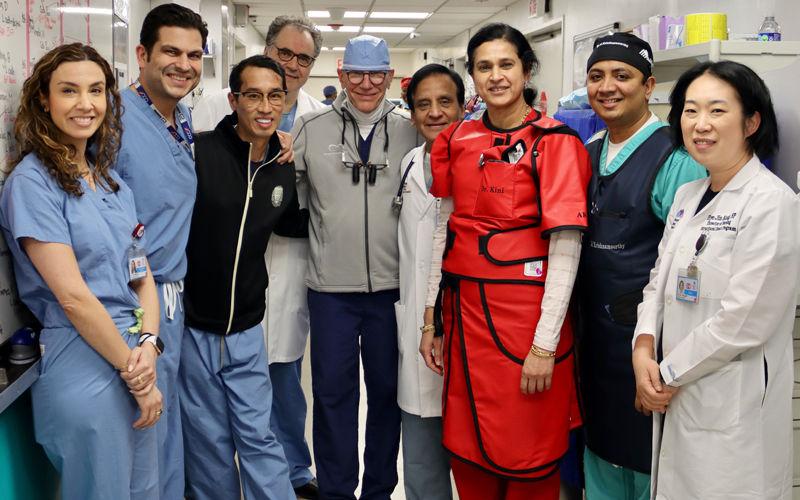
Mount Sinai Cardio-Oncology Program Receives Highest Designation for Excellence

Gagan Sahni, MD, right, Director of Mount Sinai’s Cardio-Oncology Program, with Chime Lhamu, NP

The Cardio-Oncology Program at The Mount Sinai Hospital, under the directorship of Gagan Sahni, MD, has once again been awarded Gold Center of Excellence status. This renewed designation extends through 2028, marking another three years of internationally recognized excellence.

This is the highest designation of certification from the International Cardio-Oncology Society (IC-OS), the largest international platform for physicians and nurse practitioners dedicated to cardiovascular care of cancer patients.

In 2022, Mount Sinai became the first institution in New York State to be awarded Gold status as a Cardio-Oncology Center of Excellence by IC-OS. Some 53 cardio-oncology programs nationwide and 27 worldwide have been awarded this recognition acknowledging exceptional cardiovascular care of oncology patients. This international honor by IC-OS is awarded at three levels—bronze, silver, and gold. To receive a Gold certification, the institution must fulfill stringent requirements across six scoring categories, including patient volume, research and publications, interdisciplinary care, education, committee involvement, and program building. It is valid for three years and signifies the program has demonstrated outstanding professional contributions to Cardio-Oncology.

“Many cancer treatments—which includes chemotherapy, radiation, and immunotherapy—can adversely affect the heart, and it is imperative that the appropriate patients are referred to a specialist in the field of Cardio-Oncology in a timely way,” explains Dr. Sahni, Associate Professor of Medicine (Cardiology), Icahn School of Medicine at Mount Sinai.

“My specialty focuses on early prevention, detection, treatment, and management of the potential cardiac effects of cancer treatments, so that the patients are able to safely continue their therapies. These cardiac adverse effects may include a myriad of conditions such as congestive heart failure, hypertension, arrhythmias, blood clots, angina, and pericardial effusion—a buildup of fluid around the heart. All of these conditions should be addressed promptly by a specialist who is familiar with the effects of cancer therapies and coordinates tailor-made cardiology care with the patient’s oncologist.”

The Cardio-Oncology clinic at Mount Sinai was established in 2013 by Dr. Sahni, who is a Fellow of the International Cardio-Oncology Society, one of fewer than 20 physicians in the world awarded this distinction for her contributions to the field. The program provides personalized cardio-oncology consultations to more than 2,500 cancer patients annually from The Tisch Cancer Center and across the Mount Sinai network with inpatient, outpatient, and telemedicine consultations. This includes nearly a decade of close multidisciplinary collaborations with oncologists, radiation oncologists, onco-surgeons, onco-generalists, onco-nephrologists, onco-neurologists, onco-endocrinologists, and nurse practitioners.

“This designation of Gold Center of Excellence recognizes the dedication of the Cardio-Oncology team at The Mount Sinai Hospital in advancing specialized heart care for our cancer patients at a nation-leading level, and we are proud to be able to provide state-of-the-art specialty care to them,” says Dr. Sahni.

Physicians can make Cardio-Oncology appointments for their patients by calling 212-241-4977.

Mount Sinai Fuster Heart Hospital Awarded Transcatheter Valve Certification by American College of Cardiology for Second Time in a Row

Mount Sinai Fuster Heart Hospital at The Mount Sinai Hospital has again earned the American College of Cardiology’s Transcatheter Valve Certification. Mount Sinai is the only cardiac center in New York City and one of six in New York State to receive this recognition. This award is a symbol of expertise, quality and safety of care, and commitment to treating patients who need transcatheter aortic valve replacement.

This award follows a prestigious “high performing” rating in transcatheter aortic valve replacement from U.S. News & World Report. This rating is based on multiple categories including patient survival, patient volume, and stroke prevention.

Transcatheter aortic valve replacement, also known as TAVR, is a minimally invasive procedure for patients with severe aortic stenosis, in which the aortic valve doesn’t fully open. This reduces blood flow leaving the heart and causes chest pain, fatigue, and shortness of breath. TAVR allows the aortic valve to be replaced without open-heart surgery. Interventional cardiologists and cardiac surgeons work together to deliver the new heart valve through a catheter that runs from a blood vessel in the groin to the aortic valve. The team then deploys the transcatheter valve within the diseased aortic valve, so the new valve can function immediately.

“It is an absolute honor that we have received Transcatheter Valve Center certification from the American College of Cardiology after a very detailed review of our structural heart program. This certification solidifies Mount Sinai Fuster Heart Hospital as one of the premier centers in the nation for percutaneous nonsurgical valve procedures,” says Samin Sharma, MD, Director of Interventional Cardiology for the Mount Sinai Health System.

Mount Sinai Fuster Heart Hospital underwent a rigorous evaluation in which reviewers from the American College of Cardiology conducted an analysis of key areas including:

  • Quality of care
  • Clinical outcomes and patient experience
  • Quality assessment and performance improvement initiatives
  • Multidisciplinary approach and shared decision making by heart team for patient care
  • Review of metrics from national registries
  • Staff credentialing, training, and education
  • Equipment safety and inspection
  • Infection control guidelines

“The American College of Cardiology Certification is a testament to the close collaboration and active involvement including interventional cardiologists, cardiac surgeons, imaging specialists, heart failure specialists, and nurse practitioners working closely together to offer the best experience possible to our patients at Mount Sinai,” says Gilbert Tang, MD, MSc, MBA, Surgical Director of the Structural Heart Program at the Mount Sinai Health System.

“Our center, through a combination of technically skilled operators and careful attention to patient details, has achieved the best outcomes. Regular communication with patients’ families and the referring physicians has made us a preferred center for transcatheter valve therapies,” says Annapoorna Kini, MD, Director of the Cardiac Catheterization Laboratory at The Mount Sinai Hospital.

The certification is based on established national clinical measures to support clinical decisions and links process improvement to patient outcomes. Hospitals that achieve Transcatheter Valve Certification learn best practices for implementing evidence-based medicine to support patient-shared decision making and can track key performance metrics to better identify opportunities for improvement.

Heart Healthy Exercise Tips for Babies and Young Children

Children who learn healthy habits early in life are likely to continue these practices as they grow older. There are some simple and fun heart-healthy activities that parents can promote on a regular basis to keep good cardiovascular health and set a course of healthy habits for life.

Samara Per, PT, DPT, CBIS

Samara Per, PT, DPT, CBIS, Senior Pediatric Physical Therapist in the Department of Rehabilitation and Human Performance at Mount Sinai, shares her exercise recommendations that kids of all ages can use to start practicing heart health.

“When thinking about how to best promote exercise in children, we can use play as an easy way to introduce and encourage movement,” she says. “Children are innately curious about their surroundings and how they can interact with their world. One of the best ways to support this is through purposeful play.”

Exercises for Newborns

  • Help newborns find their hands, encouraging them to bring their hands together and to their mouth so that they can learn about how their hands can be used to interact with their body.
  • Make sure that newborns spend time in various positions throughout the day when they are awake—including their sides and tummy to encourage strong postural muscles and allow them to learn about how their body can move on different surfaces.
  • Aim for 20 minutes of purposeful play a day to help a newborn’s development.
  • Encourage newborns to visually track high contrast baby cards to start to use their eye muscles so that they are better able to see and visually interact with their environment as they age.

Exercises for Babies

  • Place toys around your baby on the floor, just out of reach, to encourage movement around the environment. This allows babies to explore and learn new skills, such as rolling and crawling.
  • Once babies start to be on the move, further encourage skill development by moving toys to various surface heights. This can help to develop their muscles so they can sit, kneel, and stand all while focusing on play.
  • As babies age, increase their play time as their wake windows increase—aiming for 45 minutes of purposeful play a day.

Exercises for Toddlers and Young Children

  • Encourage everyday mobility by turning walking into adventures—make it fun by hiding toys around the house and yard, or perhaps go for a walk to collect leaves and sticks for an art project.
  • Encourage dancing or walking like your child’s favorite animal for increased endurance, such as crab walking and bear walking.
  • Kicking a ball back and forth, playing hopscotch or “Simon Says” are great for balance, and can help children to build a strong foundation for movement.
  • Once children have grown into toddlers and young children it is recommended to increase purposeful play to 60 minutes a day.

By incorporating simple exercises and body challenges into play, you can help contribute to heart health and encourage children to grow up with strong bodies.


When Should Adolescent Congenital Heart Patients Transition to Adult Care?

Decades of advances in pediatric cardiology has allowed for children with congenital heart conditions to thrive, growing into adolescents and then adults capable of starting families of their own. Adult congenital heart disease patients should seek specialized care throughout their lifetime.

In this Q&A, Kali Hopkins, MD, Director for the Adult Congenital Heart Disease Transition Program at Mount Sinai Fuster Heart Hospital and Assistant Professor of Medicine and Pediatrics at the Icahn School of Medicine at Mount Sinai, discusses the importance of transitioning to an adult congenital cardiologist and continuing care to ensure that patients can lead long, healthy lives.

Kali Hopkins, MD

What are the different types of congenital heart disease?

Congenital heart disease is a condition that children are born with and can range from the very simple to very complex. Sometimes children need interventions or operations shortly after birth, and for others, we may simply monitor their condition.

On the simple side, there are atrial or ventricular septal defects, often termed “a hole in the heart,” which is a defect in the wall between the right and left chambers of the heart. These are very common defects and may or may not warrant treatment. More complex congenital heart conditions, include diagnoses like tetralogy of Fallot or transposition of the great arteries, which usually do require that the infant or child undergo surgery. Other more complex conditions include single ventricle heart disease, a condition that requires a series of operations to reroute the child’s bloodflow.

What treatments are available?

Sometimes infants or children born with congenital heart disease need interventions that are minimally invasive. An example would be a catheterization in which a tube is guided into the heart through the blood vessels for diagnosis or treatment. If there is a major problem, a child may need open-heart surgery.

Most patients with congenital heart disease will need to receive lifelong evaluation and treatment. More than 90 percent of children who are born with congenital heart disease survive into adulthood. It’s very important to understand that the treatments we now have are tremendously successful—and these children can grow up and lead typical adult lives. It is estimated that there are more adults with congenital heart disease than children living with the condition in the United States.

When should an adolescent with a congenital heart condition transition from their pediatric cardiologist to an adult congenital cardiologist?

It is very important that children and adolescents who are born with congenital heart disease continue to seek appropriate specialized care. Transition of care is an educational process which often should begin in the teenage years with the goal of the patient gradually taking over the responsibility of their care rather with the support of their caregiver. Sometimes, it takes multiple visits to have an adolescent patient appropriately prepared to transition to adult-based health care. Transfer of care, however, is the event of changing providers from a patient’s pediatric cardiologist to an adult congenital heart specialist. This should happen when they are older. There is no hard and fast rule, but by the time a patient is about 21 years old, they should be receiving care from an adult congenital cardiologist.

What kind of care should an adult congenital heart patient expect?

Often, patients go for many years without the need for any intervention. But adult congenital heart disease patients often require interdisciplinary care. There may be kidney, liver, or lung issues that come up as a result of the patient’s underlying condition or as they get older, patients tend to acquire adult-based health conditions like high blood pressure, diabetes, or coronary artery disease. It is also possible that there may never be a problem, but it is best to follow patients with congenital heart disease on a regular basis so that issues can be identified early.

We also have to think about the social fabric of their lives. Patients grow up and get jobs. They often move to another city or country; they get married and often want to have kids of their own. In doing so, they may pass the condition down to their own children. Young women with congenital heart disease may need to consult with a maternal fetal medicine specialist since some of these patients are considered higher-risk pregnancies. At the Mount Sinai Adult Congenital Heart Disease Center, we bring in a multi-disciplinary approach to meet the ongoing needs of patients as their lives change, including women with congenital heart disease who are pregnant or are considering pregnancy.

Are there lifestyle considerations that these patients should be aware of?

We always encourage our patients with congenital heart disease to try to have as normal a life as they can. When I see patients who are in their 20s and 30s, and they are doing well, I encourage them to enjoy life and have fun—within measure and with regular follow-ups. Exercise is an essential part of a healthy lifestyle, and we review any precautions that these patients should take. We want these young patients to go out there and live full lives, have careers and, when desired, their own families. We will be there throughout their journey.

What services does Mount Sinai provide for adult congenital heart patients?

Our adult congenital heart disease program at Mount Sinai is one of the few programs in New York that has been accredited through the Adult Congenital Heart Association. This accreditation confirms that we are providing comprehensive, multidisciplinary care to adolescent and adult patients with all forms of the condition.

What does accreditation mean?

It means that we offer all facets of care when it comes to adult congenital heart disease. At Mount Sinai Heart, we provide state-of-the-art care for all forms of congenial heart disease from adolescents to older adults. We can enlist the Mount Sinai Health System’s world-class physicians to provide multi-disciplinary care be it for pregnant women with the condition, evaluations for transplantation, or cardiac interventions in the catheterization lab or operating room. We also provide pulmonary hypertension evaluation and treatment, which is an important part of adult congenital heart disease care. We have a specialized cardiac imaging team here at Mount Sinai exclusively for congenital heart disease providing exceptional multi-modality imaging for our patients. We provide 360-degree care—complete and comprehensive with excellent outcomes.

Is there anything else that patients should know?

I urge adult congenital heart patients to find the right provider and stay in care—that is very important. We see many patients in their 20s and 30s and often they feel fine. At that stage, it is easy to fall out of care and not seek appropriate long-term care with an adult congenital cardiologist. But congenital heart disease is a condition that needs to be followed throughout their life. Find the right adult congenital heart disease program and make sure to follow your physician’s instructions. You’ve got a full life ahead of you and our job is to take you all the way.

Is Taking 10,000 Steps a Day Necessary for Optimal Health?

Taking a walk is an easy way to move your heart to better health. Some studies recommend walking as many as 10,000 steps a day; however, this may not be realistic for everyone. How many steps should you walk each day for optimal heart health, and what are some alternatives?

In this Q&A, Mary Ann McLaughlin, MD, Associate Professor of Medicine (Cardiology), and Population Health Science and Policy at the Icahn School of Medicine at Mount Sinai, explains how much you need to walk each day to keep your heart beating strong. Dr. McLaughlin is also Director of Cardiovascular Health and Wellness, Mount Sinai Heart, and Co-Director of the Women’s Cardiac Assessment and Risk Evaluation Program at the Mount Sinai Health System.

Do people need to walk 10,000 steps a day for optimal health? And if so, why?
There are studies showing that overall risk of death or heart attacks is reduced in people who walk at least 10,000 steps a day. More recently, in the Journal of the American Medical Association, there was an article looking at those who walked 8,000 steps or more, and it showed that in 3,000 adults followed for over 10 years, those who exercised at least 8,000 steps a day had reduced death rates. They found that even exercising 8,000 steps or more just one to two days a week had a significant reduction in dying from cardiovascular disease or dying period. This study supports that idea that you can—by step counting—have very good effects on cardiovascular health.

Is there a lower number of steps people can aim for that would still allow them to achieve good heart health?
We now know that 8,000 steps a day actually is very effective, even just one to two times a week. In addition, being active at least five hours a week does have health benefits. Anything more than being a true couch potato definitely can incrementally improve cardiovascular health, and those people who work very long hours during the week and are weekend warriors, those who exercise vigorously on weekends alone, can still reduce their risk of cardiovascular bad outcomes. You don’t have to do 10,000 steps a day, per se. Any bit of exercise is better than none at all.

What are the cardiovascular risks of being too sedentary, and how does walking reduce these risks?
When we look at the risk of heart attack, we look at some major risk factors. Diabetes is one; hypertension is another; high cholesterol is another; family history of premature coronary disease is another. When we look at what exercise does, it improves the vascular health—the blood vessels are more effectively exchanging oxygen to the muscles and to the brain; it reduces obesity and the effects of diabetes on the heart. Both of those—by reducing excess weight and sugar—can improve the risk of cardiovascular disease.

What walking speed should I aim for to get the best cardiovascular health results?
When we look at intensity of exercise, we actually have different scales that we use in cardiac testing. We know that two and a half to three miles per hour is considered moderate intensity—that’s what we say is equivalent to three metabolic equivalents of exercise, or three “mets.” When people are walking more vigorously—up to four miles per hour—that’s considered vigorous exercise

What other exercises will give me similar health results?
If you don’t particularly love to walk all the time, things like bicycling at 6 to 12 miles per hour can reduce cardiovascular events; jogging around seven miles per hour; swimming 50 yards per minute; tennis, especially singles tennis, pickleball, and even doubles tennis, can be very vigorous exercise.

What are some other health benefits of walking?
Recently, the Journal of American Medical Association—Neurology, showed that those who had a higher number of steps at 9,000 steps per day, had a lower risk of dementia. For those who dislike  exercise, when we talk to them about what the real benefits are—prolonging life, reducing risk of heart attacks and now, dementia—that will have a very big impact.

How many minutes per week should I be walking or exercising?
The American Heart Association guidelines have recommended at least 150 minutes per week of moderate intensity exercise, or 75 minutes a week for vigorous aerobic activity for those who want to be weekend warriors. We also recommend adding resistance or weight muscle strengthening. For overall health, that helps balance, reduces risk of falls as we age, and anything that reduces time sitting is important. Many people are using standing desks, and that is actually shown to be a little healthier than sitting all day. Anything that gets everyone off the couch has excellent health benefits.

What else can I do to improve my heart health?
The other important part of that is eating healthy. You want a healthy diet, one that’s lower in saturated fat, higher in vegetables, more of a plant-based diet, with healthy meats, including fish and chicken, less of the red meat and saturated fats. I hope you found this helpful and go out and take a good walk this weekend.