SARS-CoV-2: Three Leading Microbiologists Discuss the Path Forward

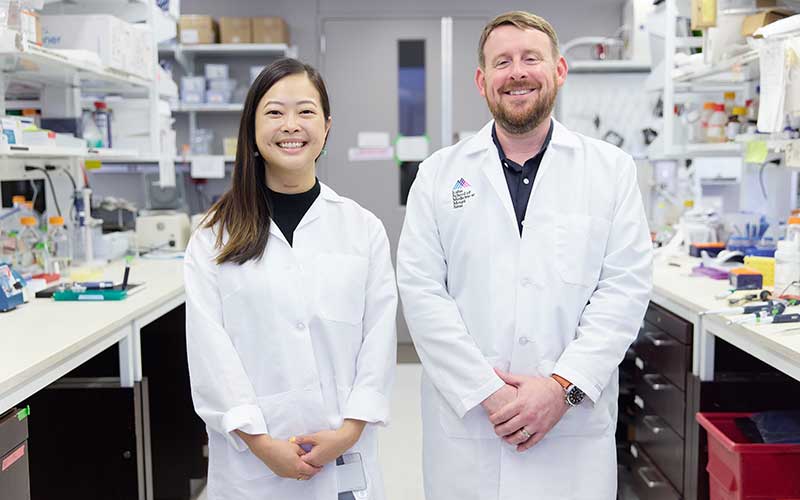
From left: Florian Krammer, PhD, Adolfo García-Sastre, PhD, and Peter Palese, PhD

Microbiologists at the Icahn School of Medicine at Mount Sinai, who created the first and most reliable test to determine whether an individual has antibodies to SARS-CoV-2, have been monitoring the virus since it began circulating in Wuhan, China, in late 2019.

Now, Peter Palese, PhD, Horace W. Goldsmith Professor and Chair of the Department of Microbiology, and Florian Krammer, PhD, Mount Sinai Professor in Vaccinology— weigh in on the future of SARS-CoV-2 and its place in our lives. They, and their colleague, Adolfo García-Sastre, PhD, the Irene and Dr. Arthur M. Professor of Medicine, recently created a low-cost COVID-19 vaccine that can be manufactured wherever influenza vaccines are made—particularly in low-and-middle-income countries. The scientists are also working on a universal flu vaccine, which would confer immunity without having to be administered annually.

As we move away from this pandemic will SARS-CoV-2 continue to play a large part in our lives?  

Dr. Palese: Clearly the future is difficult to predict, but one likely scenario would be similar to the way we manage influenza viruses, which necessitates continuing vaccinations as we go into the future—perhaps once a year or once every two years. In this case, the virus continually changes but the effects can be ameliorated by vaccines, and those vaccines have to be changed. But they reduce fatality and hospitalization and the need for people to stay home.

Dr. Krammer: In this scenario the virus is not going to disappear. It’s just going to stick around and become the fifth coronavirus that circulates in humans. The other four coronaviruses make up about 30 percent of all common colds, and they’re seasonal; they come in the winter like influenza.

Dr. García-Sastre: Some of these common coronaviruses that cause the common cold have been with us for a long time and are very different from SARS-CoV-2. They are happily living with us, rarely cause any major disease, and do not cause a threat.

Dr. Krammer: Now, influenza typically causes more damage than these common coronaviruses which are typically causing mild infection, except in people who have problems with their immune system who are sometimes brought to the intensive care unit. I think SARS-CoV-2 will land somewhere between influenza and human coronaviruses—between those two extremes.

Is it possible that this virus will simply disappear?

Dr. Palese: You can never exclude the possibility that this virus will peter out the way the coronavirus (SARS-CoV-1) did twenty years ago, when it emerged to cause some really high fatalities but disappeared. On the one hand it was a nightmare, but then it was over.

Dr. Krammer: I don’t think the virus will just disappear, but it might. We didn’t think there would be so many variants this quickly, especially not something like Omicron, so there might be surprises. I hope for society’s sake that this fades into the background and we’re not afraid every fall that another wave is coming. The scenario I would like to see in six months is that Peter and I – as virologists – are concerned about it but that the problem is insignificant enough so that the public does not have to be. We’ll see if that happens.

How do we continue to ensure protection from COVID-19?

Dr. Krammer: We have to look at the baseline immunity that exists in the population. If a lot of people have immunity and there is less virus circulating chances are that you either don’t get infected or, if you get infected, your immunity will be protect you against severe outcomes. Then the disease and infections become less relevant. And that is what we hope for. Now, you can get there through vaccinations—that’s the painless way, or you can get there by having had the infections, and that’s the painful way. But both contribute to having higher baseline immunity in the population. Unfortunately, even in this scenario, immunocompromised patients are still at risk of severe outcomes although there risk of getting infected is lower.

Dr. García-Sastre: Vaccinations are still the solution to the problem. We should make sure that as many people as possible are vaccinated and boosted.

Dr. Krammer: I think we need to keep working on vaccines against SARS-CoV-2. Right now we have this situation where the vaccine protects very well against severe disease if you’re not immune compromised. But those vaccines are not protecting very well from infection anymore. They did against the original virus, but not with the variants. That’s why, for example, we need a variant-specific vaccine for Omicron. There are ways to make vaccines differently so you get more sterilizing immunity, which would suppress infections more, in general, and that would make the world safer for those who don’t mount good immune responses.

Dr. Palese: In creating our COVID-19 vaccine at Mount Sinai, we are using the Newcastle-disease virus in a vector-driven approach. If the FDA [U.S. Food and Drug Administration] is agreeable and allows the comprehensive use of genetically modified viruses, such as ours, then we can prevent the emergence of these new variants by vaccinating right away with the correct vaccine against the new variant, and we should be in good shape.

Do you think the public needs a fourth vaccine right now?

Dr. Krammer: For populations that don’t mount optimal responses or their responses disappear quickly, there might be an advantage in getting another dose. But for the general population, I don’t think this is useful right now. If there is a fourth dose, it should be variant-specific, an adapted vaccine that reflects what’s circulating right now.

For immunocompromised individuals, there are already a couple of important therapeutic treatments—including PAXLOVID from Pfizer Inc., operating under the FDA’s emergency use authorization—that can help them to greatly reduce their risk of a severe outcome.

Is it feasible to create a universal coronavirus vaccine—similar to the universal influenza vaccine you are developing?

Dr. Krammer: By universal you mean a variant-proof SARS-CoV-2 vaccine, I assume? One that would protect against all variants? We’ve made a lot of progress with the universal influenza vaccine in the last few years. But vaccine development has just started for coronaviruses and there are a lot of approaches out there. Coronaviruses are very diverse. A truly universal coronavirus vaccine would include protection against SARS-CoV-1 and other viruses in that subgenus and then you have a bigger genus of betacoronaviruses and, in addition, you have alpha-, delta-, and gammacoronaviruses (meant are the coronavirus genera, not the SARS-CoV-2 variants). So developing a universal coronavirus vaccine that would protect against all of them is a very big ask. It might be possible at some point, but it is small steps now and would take a lot of time. Of course, something that protects against variants that are around now or could be developed within the next five years, that’s actually possible.

As COVID-19 Cases Fall, Here Are Four Things to Keep in Mind About Masking and Safety

The CDC has assigned a “community level” of COVID-19 risk for each county in the United States, based on factors like total COVID-19 cases and hospital admissions. Right now the level is “low” in most of the New York City area.

The number of COVID-19 cases in New York is returning to the levels before the Omicron surge that began in December, and the Centers for Disease Control and Prevention has announced new guidance on masking.

We are heading in the right direction, and “there is reason for guarded optimism,” says Bernard Camins, MD, Medical Director for Infection Prevention at the Mount Sinai Health System, who has been tracking COVID-19 since the first cases were identified in New York in March 2020.

As the pandemic in New York approaches the two-year mark, here are four things to keep in mind:

  • Masks are still required in hospitals and health care facilities and on public transportation. N95 and KN95-type masks give you the most protection, followed by surgical masks, with cloth masks offering the least. We recommend you wear the best type of mask you are comfortable wearing that covers your mouth and nose.
  • The CDC has now assigned a “community level” of COVID-19 risk for each county in the United States, based on factors like total COVID-19 cases and hospital admissions. Right now the level is “low” in most of the New York City area. That means masks are not required in most places, but you can choose to mask at any time. If you have symptoms and a positive test you should isolate and stay home for at least six days and wear a mask when around others until you have recovered. If you have been exposed to someone with COVID-19, you should wear a mask around others until you are certain you have not been infected.  You can check your county’s “community level” on the CDC website.
  • Getting vaccinated and a booster shot is still recommended and is the best way to protect you and your family against the disease. Boosters are recommended even if you have already had COVID-19.
  • There are still many people who are at higher risk of infection: older adults, people with weakened immune systems (such as those who have been receiving active cancer treatment for tumors or cancers of the blood), and kids under five, as vaccines have not yet been authorized for young children.

One final note: Mount Sinai is committed to providing you with the COVID-19 information you need to keep yourself and your family safe and healthy. You can always find the latest updates from public health authorities and on our website.

Why a Master’s Degree? Mount Sinai’s Outstanding Graduate Students Share Their Experiences and Aspirations

Here, we share the educational journeys of seven current and former students at Mount Sinai’s Graduate School of Biomedical Sciences. Learn what they are studying and how they will use their degree as they explore new paths and careers.

Medical Student Takes Detour to Understand the Potential of Artificial Intelligence

“I envision myself becoming an ambassador between the clinical side and the engineers and technicians who are on the development side, or even developing tools myself. Either way, my goal is to be on the forefront of harnessing AI for the benefit of dementia patients.”

Read his story

Aleta Murphy, MSBS: How a Brother With Autism Started a Mount Sinai Graduate Student on a Scientific Journey 

“Mount Sinai appealed to me because of the strong focus on biology as it relates to human diseases and medicine.”

Read her story

Briana Bell, MPH, Came to Mount Sinai for a Master of Public Health and Discovered a World of Research Opportunities

“I was also drawn [to Mount Sinai] by the extensive research experience of the program’s directors…their expertise and mentorship have been very beneficial for me.”

Read her story

Jeannys Nnemnbeng, MD, RRT, MSCR: On the Road to Becoming a Physician-Scientist With a Master of Science in Clinical Research

“I was looking for a program with a very specific focus on clinical research, and I knew Mount Sinai was top-notch, which meant I would have a very strong foundation for achieving my goal of becoming a physician-scientist in internal medicine.”

Read her story


Rosemary Espinal, BSN, RN: An ICU Nurse Enrolls in the Master of Science in Health Care Delivery Leadership Program To Bring New Perspectives to Patient Quality and Safety

“I want to use what I have learned to provide excellent care from a new perspective, address the disparities my mother faced as a non-English-speaking immigrant, and guide the next generation of nurses to high standards of quality and safety for our patients.”

Read her story


A Robust Immunotherapy Program and a Highly Collaborative Environment for Research Draws Matthew Brown to the Master of Science in Clinical Research Program

The potential to have a significant impact in improving patient outcomes and expanding the range of therapeutic options available to patients is what excites me.”

Read his story


Tina Aswani Omprakash: A Journey From Inflammatory Bowel Disease Patient, to Patient Advocate, to Master of Public Health Student

“I gained a knowledge base that expanded my understanding of the disease and gave me insights to approach public health not just from my own personal experience but from a broader health care perspective.”   

Read her story


When Omicron Struck, Mount Sinai’s Students Signed Up to Help

Arman Azad and Aliza Gross

Several days after Christmas, second-year medical student Arman Azad met with top administrators at the Icahn School of Medicine at Mount Sinai to plan how he and fellow students could help the Mount Sinai Health System handle the crush of COVID-19 patients falling sick from the Omicron variant.

As co-leader of the Student WorkForce at Icahn Mount Sinai, Mr. Azad says his job involved “helping the Health System deal with the most severe bottlenecks, as cases rose and staff were in isolation, and then organizing students to address those needs.” He and his co-leaders worked closely with their deans to mobilize students for appropriate roles, ensuring they had the training and protective equipment needed to stay safe.

During this latest COVID-19 surge, 198 medical, PhD, and master’s students at Icahn Mount Sinai have logged roughly 5,000 hours performing various tasks. They have worked in the Emergency Departments at six of the Health System’s eight hospitals and have also helped run asymptomatic testing programs for staff in those locations. Students have assisted in the pop-up testing sites in the student resident hall. And at The Mount Sinai Hospital, which shares a campus with the school, they have delivered meals to inpatients and assisted in the urgent care center.

Their efforts represent the fourth wave of student involvement since Mount Sinai’s Student WorkForce was created in March 2020, at the start of the pandemic. Since then, the WorkForce has ebbed and flowed to meet the needs of Mount Sinai’s hospitals. Unlike in earlier waves, the students recently received an hourly wage for their work. Along the way, they have also honed their WorkForce model, sharing it with other schools and health systems throughout the country. Students published a paper about their contributions in June 2021 in Academic Medicine.

In addition to assisting staff, WorkForce members say the most gratifying aspect of their jobs is helping the patients who need Mount Sinai most. Many of Mount Sinai’s hospitals serve communities in New York City that have been disproportionately affected by the pandemic.

On New Year’s Eve, Mr. Azad worked in The Mount Sinai Hospital’s Emergency Department into the early morning hours, taking patients’ blood pressure and other vitals.

Calista Dominy and Brett Weingart

“It was a busy night and an opportunity to learn from experienced providers and offer relief to staff where I could,” he says. “The pandemic has brought to light many of the inequities in medicine, and Omicron only amplified that. For people who can’t access consistent primary care, the emergency room serves a critical role, one that was threatened by staffing shortages as COVID cases surged. I’m proud of my fellow students who did their small part to ensure the Hospital could continue providing care to those who needed it most.”

Shortly after recovering from COVID-19 herself, Calista Dominy—also in her second year of medical school—assisted in The Mount Sinai Hospital’s Emergency Department on New Year’s Eve, as well. Ms. Dominy says one of the things she loves most about Icahn Mount Sinai is its strong commitment to social justice and student advocacy.

“Working New Year’s in the emergency room is an experience I will never forget,” she says. “The Omicron surge brought many more patients through the doors on a night that is typically notoriously busy.”

Workforce member Jesse F. Mangold, who is a dual MD-PhD student with a specialty in microbiology, chose to deliver meals to The Mount Sinai Hospital’s COVID-19-positive inpatients.

Jesse F. Mangold

“Meal delivery may not be the first role that comes to mind when you think of a first responder, but it means a lot to patients who have reduced contact and need nutrition for recovery,” Mr. Mangold says. “There was this tremendous bottleneck because you couldn’t just enter their rooms with a tray. All of the safety precautions needed to be implemented. My task served two needs—to feed our patients and relieve our already taxed nursing staff.” Before he was able to enter a patient’s room, Mr. Mangold had to properly don his personal protective equipment and then properly doff it immediately after leaving.

In the Hospital’s kitchen, located in the building’s basement and through a labyrinth of hallways, Mr. Mangold worked alongside a staff member who was seven months pregnant. “She was putting the Hospital and its patients first and taking personal risks to bring meals to patients,” he says. “Every team member is essential. She is a health care hero.”

Second-year medical student Claire Ufongene helped Mount Sinai conduct asymptomatic testing of employees. “The asymptomatic testing program allows employees to regularly monitor their health and return to the hospital safely,” she says. “It’s been wonderful to work with members of the Mount Sinai community, including students and employees. I’ve been happy to contribute in a small way to facilitate a testing process that’s easy and accessible.”

Claire Ufongene

Early last year, medical student Aliza Gross became involved in addressing vaccine hesitancy and helping patients obtain COVID-19 vaccine appointments through the internet and their Mount Sinai MyChart apps. At Mount Sinai Morningside, on the Upper West Side of Manhattan, she recently helped counsel patients entering the Emergency Department about the benefits of receiving a vaccine.

“It was very meaningful to have patient contact after spending so much of our medical school career remote,” she says. During the most recent spike, Ms. Gross took on the role of Student WorkForce co-leader and started taking shifts in the Mount Sinai Health System’s Express Care center—an urgent care facility—helping administer COVID-19 testing to sick patients. “It was gratifying to help our staff where they were experiencing the biggest backlogs,” she says.

Now that the worst of the Omicron wave seems to be receding, Mr. Azad says students remain ready to respond to future COVID-19 surges. “One lesson from the pandemic is that all of us, no matter our training or background, can in some way help protect our Health System and those we care for,” he says.

Milestone Gift From Marc and Jennifer Lipschultz Elevates Precision Immunology Research at Mount Sinai

Miriam Merad, MD, PhD

The Mount Sinai Health System has announced a transformative multimillion-dollar gift from Marc Lipschultz, who serves on Mount Sinai’s Boards of Trustees, and his wife, Jennifer, to the Precision Immunology Institute (PrIISM) at the Icahn School of Medicine at Mount Sinai.

PrIISM has undertaken an innovative and ambitious research agenda aimed at understanding the immune system’s universal role in human health, with the goal of combatting and preventing the world’s most devastating diseases. Marc and Jennifer Lipschultz’s generous support will strengthen PrIISM’s core research programs and the institute will be renamed the Marc and Jennifer Lipschultz Precision Immunology Institute in recognition of their investment.

Nearly every disease has an immune component, making PrIISM’s work particularly important. PrIISM is led by Director Miriam Merad, MD, PhD, a renowned physician-scientist and global leader in immunology, who also serves as Director of the Mount Sinai Human Immune Monitoring Center and Professor of Medicine (Hematology and Medical Oncology).

“We are so thankful to Marc and Jennifer Lipschultz for their visionary support of PrIISM,” says Dr. Merad.  “Their gift will allow us to expand our research and drive breakthroughs in immunology that will help us better understand and target the underlying foundations of major human disease.”

Under Dr. Merad’s leadership, PrIISM is already making pivotal advances in precision medicine and developing novel technologies to revolutionize the diagnosis and treatment of a broad spectrum of diseases, including cancer, neurodegeneration, atherosclerosis, and aging.

Brian Brown, PhD, Associate Director of PrIISM, leads the development of new cell and gene engineering approaches to understand and manipulate the immune system.

“The Lipschultz’s generous investment is extremely timely and will help us harness the extraordinary advances in our understanding of the human immune system to develop novel targets of diseases,” says Dr. Brown.

“Jennifer and I are proud to support the revolutionary immunology research at PrIISM,” says Mr. Lipschultz.  “We are excited to see how this meaningful work will transform the future of medicine and make a true difference in the lives of patients at Mount Sinai and beyond.”

Valentin Fuster, MD, PhD, Receives the Prince Mahidol Award, Joining Other World-Renowned Figures in Science and Medicine

Her Royal Highness Princess Maha Chakri Sirindhorn, as the Representative of His Majesty the King, presenting the Prince Mahidol Award in the field of Medicine to Valentin Fuster, MD, PhD. for the Year 2020 at the Chakri Throne Hall.

Valentin Fuster, MD, PhD, Director of Mount Sinai Heart and Physician-in-Chief of The Mount Sinai Hospital, traveled to Thailand to receive the Prince Mahidol Award in the field of Medicine on Thursday, January 27, where he was honored alongside other renowned figures in science and medicine.

Among those named by Thailand’s Royal Family to receive the Prince Mahidol Award since 1997 are five who subsequently received the Nobel Prize.

In November 2020, Dr. Fuster was named a recipient of the prestigious Prince Mahidol Award in recognition of his international leadership over the past four decades as a clinical scientist, for his breakthrough contributions to cardiovascular medicine, and more recently as an advocate for promoting global cardiovascular health worldwide. The other 2020 recipient, Bernard Pécoul, MD, MPH, Founder and Executive Director, Drugs for Neglected Diseases initiative, received the Prince Mahidol Award in the field of Public Health. He was previously Executive Director for Médecins Sans Frontières. The 2020 awards ceremony was put off due to the global COVID-19 pandemic.

In Thailand on Thursday, Dr. Fuster received his award during a special televised ceremony, joining the 2021 recipients of the Prince Mahidol Award: Katalin Karikó, PhD, Drew Weissman, MD, PhD, and Pieter Cullis, PhD, whose work on mRNA technology is used in the Pfizer-BioNTech and Moderna vaccines.

Dr. Karikó, Senior Vice President, BioNTech RNA Pharmaceuticals and Adjunct Associate Professor, Perelman School of Medicine, University of Pennsylvania, and Dr. Weissman, Director of Vaccine Research, Infectious Diseases Division, and Professor, Department of Medicine, also at the Perelman School of Medicine, were recognized for achievements that led to the rapid availability of COVID-19 mRNA vaccine, which has saved millions of lives and has become an important tool for the control of the COVID-19 pandemic around the world.

Dr. Cullis, Professor, Department of Biochemistry & Molecular Biology, University of British Columbia, Vancouver, was recognized for making COVID-19 mRNA vaccines possible and for creating a way to safely deliver nucleic acid into cells, which opened up possibilities for various applications of nucleic acid technology for prevention and treatment of many diseases in the future.

In discussing his award, Dr. Fuster said, “Our more recent research is dedicated to understanding the scientific basis of cardiovascular health, including the heart and brain. This award serves as motivation to continue to work toward achieving global cardiovascular health, and I consider it as an honor to all the teams across the world who have helped with these projects.” Dr. Fuster also serves as General Director of the National Center for Cardiovascular Research in Madrid, Spain, and Editor-in-Chief of the Journal of the American College of Cardiology.

Dr. Fuster is a past president of both the American Heart Association and the World Heart Federation. He is a member of the National Academy of Medicine, where he served as chair of the Committee on Preventing the Global Epidemic of Cardiovascular Disease, and was a Council member of the National Heart, Lung and Blood Institute. Dr. Fuster was also President of the Training Program of the American College of Cardiology.

Dr. Fuster’s research is unparalleled in areas relating to the causes, prevention, and treatment of cardiovascular disease globally, and spans the full range from basic science and molecular biology, through clinical studies and large-scale multinational trials, to population sciences and global medicine. He has 35 worldwide honorary degrees and is the most highly cited Spanish research scientist of all time, according to Google Scholar.

The Prince Mahidol Award Foundation gives out two awards every year for advancing the world’s medical and public health services.

The five past winners of the Prince Mahidol Award who subsequently received the Nobel Prize are:

Barry J. Marshall from Australia, who was conferred the Prince Mahidol Award in the field of Public Health in 2001 for the discovery of the new bacterium identified as Helicobacter pylori that caused severe gastritis and its sensitivity to particular antibacterial drugs. He received the Nobel Prize in the field of Medicine in 2005 for the same discovery.

Harald zur Hausen from Germany, who was conferred the Prince Mahidol Award in the field of Medicine in 2005 for the discovery of the human papilloma virus HPV16 and HPV18 from the cancer tissue and elucidated how the viruses turn normal cells into cancer cells. He received the Nobel Prize in the field of Medicine in 2008 for the same discovery.

Satoshi Omura, who was conferred the Prince Mahidol Award in the field of Medicine in 1997. He is known for the discovery and development of various pharmaceuticals originally occurring in microorganisms. His research group isolated a strain of Streptomyces Avermitilis that produce the anti-parasitical compound avermectin which contributed to the development of the drug ivermectin that is currently used against river blindness, lymphatic filariasis, and other parasitic infections. He received the Nobel Prize in the field of Medicine in 2015 for the same discovery.

Tu You, a member of the China Cooperative Research Group on Qinghaosu and its Derivatives as Antimalarials, who was conferred the Prince Mahidol Award in the field of Medicine in 2003 in an organisational category for the discovery of Qinghaosu as a new drug for treatment of the P.falciparum malaria. She received the Nobel Prize in the field of Medicine in 2015 for the same discovery.

Sir Gregory Paul Winter, who was conferred the Prince Mahidol Award in the field of Medicine in 2016. He was a pioneer in the field of antibody engineering and modification technology. He invented techniques to humanise antibodies for therapeutic uses, which later led to the creation of cutting-edge therapeutic drugs. He received the Nobel Prize in the field of Chemistry in 2018 for the same discovery.

From left: The Prince Mahidol Award Laureates 2021 in the Field of Medicine, Pieter Cullis, PhD, Drew Weissman, MD, PhD, and Katalin Karikó, PhD;  and The Prince Mahidol Award Laureates 2020 in the Field of Medicine, Valentin Fuster, MD, PhD, and in the Field of Public Health, Bernard Pécoul, MD, PhD, at the Chakri Throne Hall in the Grand Palace on January 27, 2022.