In early 2020, Mount Sinai treated the first COVID-19 patient. Shortly after that, New York State declared a state of emergency, and COVID-19 cases started to rise. Mount Sinai staff are coming together to share their experiences of overcoming the pandemic in a look back video, “COVID-19 Five Years Later: Reflecting. Learning. Advancing.”
“We stood at the edge of the worst health care crisis in modern memory,” said David L. Reich, MD, President and Chief Operating Officer of The Mount Sinai Hospital, who narrates the video. “And no one knew. Over the next eight weeks, over 18,000 New Yorkers would die of COVID-19—one every five minutes, over 350 every day.”
A timeline takes us through those challenging times, featuring the resilience of front-line staff in the face of what seemed like a never-ending flow of patients, while ICU beds filled up. The video, too, takes us through how scientists and researchers were working nonstop to understand the virus, and coming up with various ways to treat and test for COVID-19.
Five years since the pandemic was officially declared, the Mount Sinai Health System is able to reflect on what it achieved and learned since.
Once thought eradicated from the United States, measles is beginning to spread in communities with low vaccination rates. Texas is experiencing a measles outbreak affecting a growing number of people, a majority of them children, with one dead. In New York City, two people are reported to have contracted measles, as well as three in New Jersey. A number of other states have also reported cases, though the outbreaks are small.
Measles is a highly contagious virus with symptoms that start with fever, red eyes, cough, and progress to a rash and red spots on the skin. Without vaccination, measles can be dangerous and deadly, especially among children under five.
Jennifer Duchon, MD, MPH, DrPH
In this Q&A, Jennifer Duchon, MD, MPH, DrPH, Associate Professor of Pediatrics at the Icahn School of Medicine at Mount Sinai, discusses measles and the importance of vaccines.
What do we know about the current measles outbreak?
The current outbreak in Texas likely began with an unvaccinated individual contracting measles after travelling to a region where the disease is active, bringing it back with them, and spreading it in a community with low vaccination rates. One child died. Based on the statistics, we know that if this epidemic spreads, we expect many more children with severe complications and additional deaths.
If measles was eliminated, why has it come back?
Measles was considered eliminated from the United States in 2000. That doesn’t mean we don’t have outbreaks or cases; it means there has been no sustained transmission of measles in a particular region (such as the United States) for 12 months or more.
How contagious is measles?
Measles is a highly infectious viral infection spread through coughing and sneezing. One person with measles will spread it to 12 to 18 other susceptible people after a very short period of contact. To prevent an epidemic, about 95 percent of a specific community needs to be vaccinated. In the region of Texas where the virus is currently spreading, vaccination rates are much lower than the national average, making it extremely difficult to contain.
Could the New York region experience a measles outbreak?
Yes, absolutely. New York State, as a whole, has a robust vaccine coverage. But in some areas, such as parts of Brooklyn and Rockland County, vaccine coverage hovers anywhere from 60 to 80 percent. In 2019, New York had a similar measles epidemic that encompassed parts of New York City and Upstate NY.
Why is it important to be vaccinated?
There is no cure or treatment for measles; however, it is extremely preventable with vaccination. Vaccines vary in what they do in terms of efficacy. Some vaccines will prevent you from getting a very severe form of the disease, some prevent you from getting the disease altogether.
The measles vaccine is one of the most effective vaccines in terms of preventing people from contracting the disease. If you received one vaccine, there is about a 93 percent certainty that you won’t contract the disease. If you got two doses—as recommended—that goes up to 97 percent.
In most cases, immunity from the measles vaccine is lifelong. Unlike vaccines for COVID-19 or the flu, you don’t need booster shots or updated annual vaccinations for measles. If you are a health care worker or work with vulnerable people, such as the elderly or immunocompromised individuals, you may be required to have proof of two vaccines.
Is it true that vitamin A can provide protection from measles?
No, that data comes from outbreaks primarily in under-resourced countries where vitamin A deficiency is rampant because of malnutrition. In children who are malnourished, measles can affect the immune system in such a way that they become much more vulnerable to other diseases, and vitamin A can help prevent complications like blindness and death in those children. Vitamin A cannot prevent or treat measles.
What can I do to keep my children safe?
Vaccinate them. Any child one year or older should get the first dose of the vaccine, and a second dose at age four to six, preferably before they start school. The vaccine is not as effective on children under one year old. If you have an infant, it is important that all members of the family who are one year or older are vaccinated to protect them. In very special circumstances, where an infant could be at high risk, such as international travel, we can give the vaccine as early as six months of age. If you have questions, talk to you pediatrician.
What else would you like people to know?
The famous children’s book author, Roald Dahl, who wrote Charlie and the Chocolate Factory, lost his young daughter to measles in 1962, before an effective measles vaccine was available. In 1986, after the current vaccine was well established and part of the recommended vaccine schedule for kids, there was a measles outbreak in England due to low vaccination rates. Roald Dahl couldn’t understand why. He wrote a letter to the public describing that situation and urging people to get vaccinated. This happened back in 1986, and history is repeating itself now. This is a completely preventable disease in terms of outbreaks and morbidity and mortality. People don’t have to get this disease.
Before COVID-19 was even formally recognized as a pandemic, David L. Reich, MD, President of The Mount Sinai Hospital, was hearing from his anesthesiologist peers in Europe about a terribly problematic “respiratory disease” with a high mortality rate.
“This trusted source was telling me that people were getting very ill, and hospitals were becoming instantaneously overwhelmed with patients requiring intensive care,” said Dr. Reich, who is also Chief Clinical Officer of the Mount Sinai Health System.
“It got me thinking: if we fell into a crisis like that, do we have the structure to transform our hospital from the normal state where 15 to 20 percent of patients require ICU-level care, to one that is nearly 100 percent ICU and the next level down—intermediate care beds?” he said.
As Dr. Reich and Mount Sinai started to make contingency plans for the arrival of COVID-19 in New York City, he realized tackling a pandemic required creative and innovative solutions. Over the course of the COVID-19 pandemic—declared as such in 2020—Mount Sinai created various capabilities to tackle the crisis.
Dr. Reich discusses some of the things that were done at Mount Sinai to help provide relief to patients, the community, and the staff during the pandemic, and how those things have changed since.
David Reich, MD, President of The Mount Sinai Hospital
Clinical Command Center
Prior to the pandemic, a new Clinical Command Center was tasked with finding ways to streamline various operations across hospitals in the Mount Sinai Health System.
At the start of the pandemic—even before social distancing became common policy—various leaders from within the Health System were meeting regularly on how to empower the Clinical Command Center to address the mounting cases of COVID-19.
As New York City was overwhelmed by patients requiring hospital care during the first wave of COVID-19, the Clinical Command Center helped bring patients to unique and temporary care locations, said David L. Reich, MD (right), seen visiting the patient care tents set up in Central Park, hours prior to the arrival of the first patient.
Under the guidance of the Clinical Command Center, respiratory therapists supervised medical volunteers to deploy ventilators to sites and areas with the greatest need.
Centralizing patient admission and intake protocol within the Clinical Command Center enabled patients to be seamlessly moved from one hospital to another during the pandemic.
Mount Sinai built upon the spirit of collaboration developed during the pandemic to expand the Clinical Command Center, and it has since taken on additional responsibilities to improve care to the community, said Dr. Reich.
During the pandemic, we needed to be able to move patients around seamlessly among hospitals, especially as one or more hospitals exceeded their capacity to provide care. Many things are involved in moving a patient from one hospital to another, and with hospitals traditionally managing their own admitting offices and with individual intake protocols, there were opportunities for miscommunication and inefficiency at a time when that would have cost lives.
We did away with the barriers and empowered our nascent Clinical Command Center to centralize admitting work and transfer protocols across all of our hospitals in the system. We needed a centralized view that looked at bed capacity and management, resource needs, and medical and protective supplies. The aim was to operationalize a group with a cohesive view of a health system, rather than silos, each thinking for themselves rather than optimizing for the benefit of all.
And because we tore down those barriers, we were able to see who needed help and to fill that gap in any way necessary. For example, when the leadership team of Mount Sinai Brooklyn simultaneously fell ill from COVID-19, we sent the Vice President of Perioperative Services from The Mount Sinai Hospital and a senior nursing leader to Brooklyn to be temporary leadership.
Today, the Clinical Command Center continues to add additional functions to support health system experts. We’ve learned that there are some hospital functions that are better suited to being centralized, not just for cost savings but also from an effectiveness standpoint. And there are some functions that are better suited to sit within each site.
At the height of the pandemic, city and state testing resources for COVID-19 were overwhelmed by the sheer volume of testing requirements. There was a pressing need for Mount Sinai Health System to establish its own high-capacity testing platform.
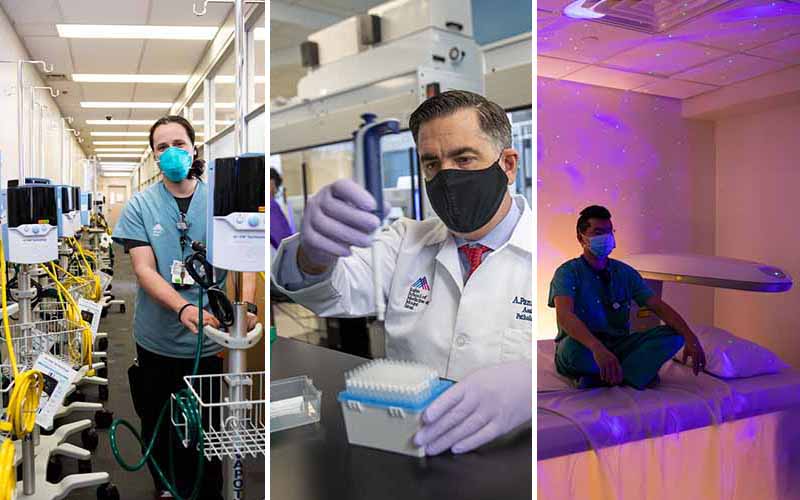
Mount Sinai tapped many of its own experts to launch its COVID-19 testing capabilities. Alberto Paniz-Mondolfi, MD, PhD, Director of Molecular Biology, was one of the key figures in launching a community testing program.
With all hands on deck and specialized equipment, Mount Sinai was able to bring its testing turnaround time down to under 24 hours.
As a result of a partnership with the Pershing Square Foundation, Mount Sinai was able to bring its testing capabilities to help schoolchildren return to classrooms, and help employees return to the workplace.
That testing program involved a simple, noninvasive saliva test. At its height, the program was collecting samples from more than 700 sites a day.
With the height of the pandemic over, the testing equipment and facilities have been repurposed toward the Mount Sinai Million Health Discoveries Program, a large-scale genetics study.
At the start of the pandemic, we needed to be able to do our own tests for COVID-19, rather than sending samples out to the city and state, because they had a six-day turnaround for results, which was impractical for the situation then.
Initially, we were using supplies from our basic science laboratories, but then Roche released a diagnostic platform that worked on one of our large-volume analyzers. Suddenly, we were able to achieve testing with a turnaround time under 24 hours that resulted in identifying which patients could be removed from isolation, saving precious personal protective equipment at a time of severe shortage.
And then, in December 2020, Bill Ackman, co-trustee of the Pershing Square Foundation, came to us and wanted to fund a project to bring kids back to schools. To do so, we needed a better testing mechanism. In partnership with Rockefeller University, we were able to implement a COVID-19 saliva testing program.
At the peak of the testing program, we were collecting from 700 sites a day, as far north as New Haven, Connecticut, and as far east as Montauk on Long Island to support employees of the Metropolitan Transportation Authority. We were also testing schoolchildren in Westchester County, NYC residents, multiple private businesses, and US Open tennis players and staff.
Now that the COVID-19 pandemic has receded, the equipment purchased using the Pershing Square Foundation grant is still being put to good use. Mount Sinai has a research study called the Mount Sinai Million Health Discoveries Program. When samples, such as blood, are collected from patients as part of their routine care, with their consent, researchers extract the DNA information as part of a genetic sequencing project. The massive database of genetic information will inform future diagnostic and therapeutic discoveries and help to design personalized treatment protocols.
Being on the frontlines during the pandemic was hard. Members within the Mount Sinai Health System came up with the idea of creating a space for staff to take a break and unwind.
Various unused public and medical spaces were turned into “recharge rooms.” Even medical examination beds that were unused due to the pandemic could find new purpose to help staff relax.
The spaces were fitted with soft or dim lighting, calming colors, and even soothing sounds and scents to help staff take their minds off the stresses of the pandemic.
“It was important for our staff to be able to take a break from the crisis,” said David L. Reich, MD, President of The Mount Sinai Hospital.
Even for temporary structures and tents erected to handle the high volume of patients at the height of the pandemic, it was important to ensure front-line staff had a place to take breaks.
The outpouring of creativity during the pandemic was inspiring. “I hope we access that creativity again and again,” said Dr. Reich.
During the pandemic, our staff were very challenged by the high rates of patient mortality. It was a hard time. It was important for our staff to be able to take a break from the crisis, and people came up with the concept of recharge, or respite, rooms.
As we had limited resources, there was an idea to turn unused public spaces, such as family rooms or certain physiotherapy rooms, into spaces where our staff could sit in a peaceful environment. Some of these rooms had music, lighting, and even scents designed to reduce stress. Others were places where individuals could enjoy some quiet contemplation.
Today, many of these rooms have gone back to their original use to support our patients and visitors. A time of great crisis can spark great creativity, and as we work to lower barriers among our hospitals, I hope we access that creativity again and again.
Is a crucial cause of multiple sclerosis (MS) residing in your gut? Stephanie K Tankou, MD, PhD, Assistant Professor of Neurology at The Corinne Goldsmith Dickinson Center for Multiple Sclerosis, is conducting research designed to prove that specific gut bacteria generate inflammation that underlies MS.
“At some point in our life, we can become exposed to various environmental stressors that can lead to profound changes in the gut microbe composition and put someone at risk for developing MS,” she says.
Trillions of microbes called the human microbiome are living in each human. The largest community of microbes, called the gut microbiome, exist in the gut. They are essential for the proper development of your immune system and your brain.
“Studies have shown that a disturbance in the normal composition of these gut microbes can lead to many diseases, including MS,” she says.
Within a healthy individual’s gut, there is a delicate balance of pro-inflammatory and anti-inflammatory bacteria. Conditions favoring an overgrowth of the pro-inflammatory bacteria can trigger inflammation in the gut leading to the breakdown of the gut barrier, also known as leaky gut. In individuals with a leaky gut, microbes in the gut can enter the bloodstream, where they will activate various immune cells, including inflammatory cells that will destroy myelin—a sheath that forms around nerves—in the brain and spinal cord of MS patients.
Several studies, including ones conducted at the Tankou Lab found that mice infused with gut microbes taken from MS patients develop more severe inflammation in the brain and spinal cord than mice that received gut microbes from healthy subjects.
“These results suggest that alterations found in the gut microbe composition of an MS patient significantly contributes to the disease,” she says. “So, the question is what changes do we need to introduce in the gut microbiome of MS patients to stop the disease?”
Dr. Tankou joined the Center staff in 2019. While she sees MS patients, she spends most of her time in her research lab.
“I became interested in the gut microbiome because one of the biggest hurdles we run into with MS, or any neurological disease, is we do not have access to the disease tissue, to the brain or the spinal cord,” she explains. “Consider the gut microbiome as a remote control for your brain. I can control the level of inflammation in the brain of my MS patients by changing the composition of their gut microbes.”
To further her theory, Dr. Tankou’s lab found that an antibiotic called vancomycin, when given orally to mice with an MS-like disease, suppresses inflammation in the brain and spinal cord. Her study showed that administering vancomycin orally causes significant changes in the mice gut microbe composition, leading to an increase in the abundance of anti-inflammatory bacteria in their gut, which decreased inflammation in the brain and spinal cord of these mice.
For her current, ongoing study, Dr. Tankou received funding from the Doris Duke Charitable Foundation to examine the impact of vancomycin on newly diagnosed MS patients between the ages of 18 and 50 who have not taken any MS treatment. Participants receive either vancomycin or a placebo as well as provide blood and stool samples.
“We are hopeful that vancomycin will cause a dramatic shift in the gut microbe composition of these MS patients that will suppress inflammation in the brain,” says Dr. Tankou. The findings from this vancomycin trial could lead to the development of the first “bugs as drugs” for the prevention and treatment of MS. “Bugs as drugs” refers to communities of gut derived bacteria with anti-inflammatory properties that can be used to suppress inflammation and disease progression in MS.
Dr. Tankou maintains that “bugs as drugs” will be safer than the current MS treatments approved by the Food and Drug Administration, which are all based on chemical structures and come with a range of side effects, whereas using microbes means nothing foreign will be introduced into patients. “We expect a new ‘bug as drugs’ therapy to be just as effective as drugs we are currently using,” she says.
The promise and hope that Dr. Tankou’s pioneering lab offers will position the Center as an institutional leader in understanding what causes MS, as well as developing novel microbiome-based therapies for preventing and treating all forms of the chronic disease.
By Kenneth Bandler, a multiple sclerosis patient, advocate, and member of The Corinne Goldsmith Dickinson Center for Multiple Sclerosis Advisory Board
The year 2025 marks five years since the COVID-19 pandemic went global. Among the many who contracted COVID-19 and recovered from the acute infection, some feel as though the disease has changed their day-to-day health for the worse. Many report a “brain fog” in which it has become harder for them to focus or think clearly, while others have various symptoms, including fatigue, pain, or even digestion issues.
This collection of symptoms has many names, but it became most commonly known as “long COVID.” When it was first observed a few years ago, physicians and researchers were divided on how to define, diagnose, or even treat it. Even less was known about why long COVID occurs and who is at risk of developing it.
Today, the medical and research communities have come a long way in understanding and tackling long COVID, says David Putrino, PhD, Director of Rehabilitation Innovation at the Mount Sinai Health System. There are, unfortunately, still misconceptions about long COVID among patients and even some health providers, and dispelling such myths is key to proper treatment, he adds.
In this Q&A, Dr. Putrino discusses to say what is known about long COVID today.
Is there a clear definition for long COVID today?
Physicians now have clear clinical guidelines and criteria for diagnosing long COVID. According to the National Academies of Science, Engineering, and Medicine, long COVID is an infection-associated chronic condition whereby somebody who has survived an acute infection with SARS-CoV-2—the virus that causes COVID-19—fails to return to their pre-infection health status within a period of three months.
Long COVID symptoms can present in different ways:
Continuous, where symptoms remain constant and do not go away
Progressive, where symptoms worsen over time
Relapsing and remitting, where a patient can feel good for a while, and then have a period of feeling very poorly, and back and forth
“We need to start thinking about long COVID in the same way that cancer researchers have been thinking about cancer for the past three or four decades.” —David Putrino, PhD, Director of Rehabilitation Innovation at the Mount Sinai Health System
What different kinds of long COVID symptoms can patients have?
Long COVID has been described as a highly diverse disease state, with studies collectively noting more than 200 symptoms.
The most commonly reported symptom, which affects more than 90 percent of patients, tends to be fatigue and a phenomenon known as post-exertional malaise. The latter is a distinct kind of energy limiting illness where if you ask someone to perform an action—such as walking on a treadmill or riding a bike—they are able to do so. But after they exert themselves, they experience a significant worsening of symptoms or a cluster of new symptoms that persist weeks to months afterwards.
Cognitive symptoms are also common, such as a worsened ability to make decisions, plan things in advance, or even regulate emotions. People speak of “brain fog,” which includes changes in attention and in short- and long-term memory, and it is evident that SARS-CoV-2 infection can significantly affect cognition. In fact, a study published in The New England Journal of Medicine in 2024 showed that any person who survives a COVID-19 infection experiences, on average, a loss of six IQ points. This is a sobering fact that makes a strong case for all healthy individuals to avoid SARS-CoV-2 infections by taking the appropriate precautions.
Some people also report gastrointestinal disturbances. These can be wide-ranging, including having diarrhea, having to go to the bathroom more than usual, increased difficulty in food moving through the body, and/or extreme constipation. In addition, some might gain new intolerances to certain kinds of food, have difficulty finishing a meal, or reduced appetite.
Recently, researchers are discovering that around 50 percent of long COVID patients might have new-onset pain. This is a disease state that really affects every organ system.
In 2024, about 17 million adults report having long COVID
For adults with long COVID, 79% say long COVID has limited their activities
Of those who said long COVID limited their activities, 25% say it has done so by a lot
The group most likely to experience long COVID is adults ages 35-49
Women are more likely to experience long COVID than men, with 8.5% of women reporting past long COVID, compared to 5.2% for men
Source: CDC
Do we know why long COVID happens?
We are starting to understand that in some cases, it could be just one path causing the symptom. In other cases, it could be a combination of pathologies. Here’s what we have found so far:
Viral persistence: Different studies have identified the presence of SARS-CoV-2 remaining in the bodies of patients with long COVID, even after the acute COVID-19 phase. There is evidence of circulating viral antigens, spike proteins in plasma, viral fragments in the gut, and so forth. We are seeing that the persistence is not latent and it’s not harmless for people with long COVID—it’s causing problems.
Latent pathogen reactivation: For some people, even if persistent SARS-CoV-2 does not cause any damage to organs, it could have caused immune dysregulation, leading to reactivation of other latent viruses. There are studies that have shown herpes virus reactivations, such as Epstein-Barr virus, in patients with long COVID, and others showing reactivation of Bartonella infection as well. It may be that the SARS-CoV-2 viral infection kicks up other pathogens that were smoldering below the surface, causing inflammation and other problems.
Autonomic nervous system dysfunction: This is the part of your nervous system that controls blood pressure, digestion, sweating, and temperature control. And we’re seeing that the virus can knock this system out of balance. When it is disrupted, people can experience something called postural orthostatic tachycardia syndrome: when they go from lying down flat to standing, they experience unpredictable blood pressure and heart rate changes that can lead them to feel as though they’re about to pass out. This is frequently misdiagnosed as anxiety or panic attacks.
Autoimmunity: Relating to immune dysregulation, we are starting to see evidence that for a subset of people with long COVID, they have functional autoantibodies circulating in their body that are designed to attack and cause damage to the body’s own tissues. We have animal studies where mice that were injected with IgG antibodies from patients with long COVID started to develop symptoms similar to that of the patient, especially in new-onset pain, whereas that phenomenon was not seen in mice receiving IgG from healthy controls.
Hormonal dysregulation: There are multiple papers on long COVID impacts on hormones like cortisol, which affect wakefulness and inflammation, as well as androgenic hormones, such as testosterone and estradiol. So women with long COVID are much more likely to have extremely low levels of testosterone, and men with long COVID might have low levels of estradiol. This may also explain why long COVID is more frequently diagnosed in women compared with men.
Are there any misconceptions about long COVID?
For the clinical community, we’ve been focusing on getting out a main message, which is that long COVID requires a precision response. If a physician is asking, “Is there a cure—singular—for long COVID,” that is the wrong question. The correct question should be, “What are the tests and techniques I should be using to identify the symptoms of the patient with long COVID in front of me, and how do I proceed from there?”
We need to start thinking about long COVID in the same way that cancer researchers have been thinking about cancer for the past three or four decades. We have seen attitudes about cancer change, starting in the ‘80s when patients were told they got cancer because they had a “Type A” personality, to one today where a patient gets individualized treatment based on age, sex, gene profile, and so much more.
That’s the sort of precision we need in long COVID. What is your medical history? Your immune history? Any genetic expression that might predispose you to chronic illnesses?
Long COVID is classified as an infection-associated chronic condition, which includes chronic Lyme disease and myalgic encephalomyelitis/chronic fatigue syndrome. Historically, these chronic conditions have been viewed as largely psychogenic, and people have been told they can be cured with cognitive behavioral therapy and exercise.
I cannot stress how damaging this is to patients, and perhaps in 30 years, we will be looking back at our approaches and be ashamed of how we were framing long COVID for patients.
Long COVID affects many people, and it disproportionately affects young people too. These are people who are in their active, prime years and we need to help them lead their best lives.
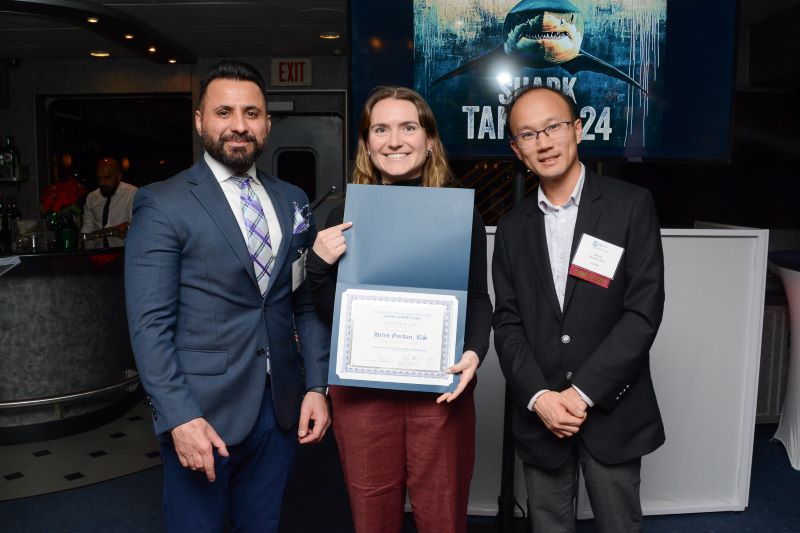
From left: Farid Khan, MBBS, co-chair of the Fellows in Training Program of the New York Chapter of the American College of Cardiology; Helen Gordan; and Samuel Kim, MD, the chapter’s program chair
Helen Gordan, a second-year medical student at the Icahn School of Medicine at Mount Sinai, recently won best clinical case abstract at the New York Chapter of the American College of Cardiology Fellows in Training competition.
Her abstract titled “Unraveling a Genetic Diagnosis After a Near Drowning Incident” describes the diagnostic odyssey of a 9-year-old boy who was cared for at Mount Sinai Kravis Children’s Hospital after he was resuscitated from near-drowning in a swimming pool.
Careful sleuthing ultimately elicited a novel cardiac genetic cause. The patient made a full recovery and is being treated successfully, and the genetic discovery will permit others to benefit in the future.
Ms. Gordan’s award is all the more impressive for having won it as a second-year medical student, competing against much more senior trainees in internal medicine and cardiology fellowship training. Ms. Gordan presented the work in an oral presentation in December.
In a Q&A, Ms Gordan discusses why she chose the Icahn School of Medicine at Mount Sinai, what has drawn her to explore pediatric cardiology as a potential career choice, and her research interests.
What inspired you to explore pediatric cardiology as a medical student?
From the beginning of medical school, I was drawn to specialties that offer meaningful long-term patient relationships and combine medical management with precise interventions. Pediatric cardiology fulfills both these criteria and more. Since every heart is unique, cardiologists must rely on fundamental physiologic principles to tailor treatments to each case. The opportunity for early intervention, especially in congenital heart defects, has an immeasurable impact on long-term outcomes, enabling children to thrive and lead full lives. It opens the door to the kind of long-term relationships with patients and families that I desire in my career.
What are your research interests?
My research interests lie at the intersection of engineering and clinical care. My undergraduate degree is in electrical engineering, so I am particularly interested in how technology can be harnessed to both enhance therapeutic outcomes and improve access to care for underserved populations. For example, asynchronous online care platforms—which allow physicians to assess patient concerns and provide treatment through messaging, patient portals, or online questionnaires— offer unique opportunities to bridge gaps in accessibility, especially for resource-limited settings. Understanding how these models can integrate with chronic disease management, including heart disease, is a growing area of interest.
What does winning this abstract award mean to you and how will it help propel your studies?
I was incredibly excited and honored to win this case competition. It has encouraged me to continue to explore challenging questions and raise questions about frameworks for diagnoses. It has allowed me to receive feedback from experts that have both refined my skills and broadened my perspective. Most importantly, it has underscored the importance of great mentorship and collaboration. I am incredibly grateful for the support I received from Dr. Barry Love and Dr. Amy Kontorovich while working on this case.
Why did you choose the Icahn School of Medicine school and how has the medical school experience been so far?
The Icahn School of Medicine stood out to me because of its emphasis on fostering diverse academic backgrounds. Coming from an engineering discipline, I was eager to join a medical institution that values multidisciplinary approaches to problem-solving and allows students to incorporate their own interests into their clinical training. The culture of innovation and research has completely exceeded these expectations. I have been able to learn about entrepreneurship in medicine through Sinai BioDesign’s THRIVE program, explore access-to-care barriers through a summer global health research program, and explore different specialties with the support of amazing faculty. My experience has been exceptional, largely due to the supportive mentorship I’ve received from Dr. Love, Dr. Gault, and many others.
What do you hope your impact will be on patients, field, and practice?
First and foremost, I hope to be an exceptional clinician. I would like to provide the expertise and empathy patients need when facing scary and vulnerable moments. I also aspire to combine innovation with equitable care to make an impact. I hope to provide solutions that enhance quality of life while ensuring accessibility to care, regardless of socioeconomic or geographic barriers. Ultimately, I want my career to serve as a bridge between disciplines and help to drive advancements that improve both individual patient experiences and systemic health care delivery.

 Before COVID-19 was even formally recognized as a pandemic, David L. Reich, MD, President of The Mount Sinai Hospital, was hearing from his anesthesiologist peers in Europe about a terribly problematic “respiratory disease” with a high mortality rate.