
A Note From Dr. Rachel Vreeman, Chair of Global Health
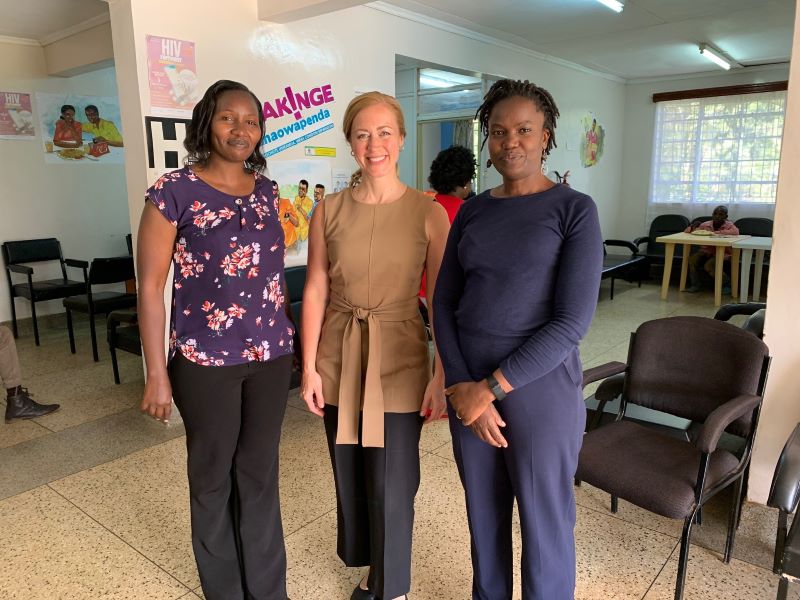
Rachel Vreeman, MD, MS, with the leadership of the Rafiki Centre of Excellence in Adolescent Health in Eldoret, Kenya.
Today, I’m writing with a heavy heart. Several of you have encouraged me to share directly about how current events are impacting our global health work, and I want to explain what that looks like.
Who I Am and What I Do
While it is my privilege to lead the Department of Global Health at Mount Sinai, I’m also a pediatrician specializing in global HIV care. I’ve spent the last 20 years working to improve care for children living with HIV.
- I’ve had the difficult job of delivering the news to countless families that their children have HIV, and I’ve witnessed too many lives lost.
- Most of my work has centered in the AMPATH Kenya partnership, where Mount Sinai partners with a Kenyan medical school and hospital system and the Kenya Ministry of Health.
- Together, we built an HIV care system that serves over 200,000 people at 300 clinics across Kenya.
- This system was initially made possible through USAID funding.
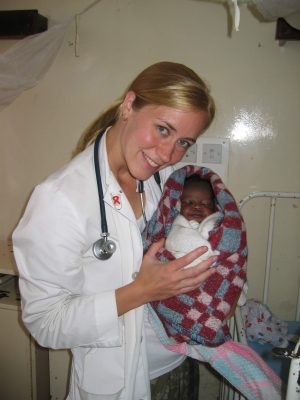
Dr. Vreeman on the pediatric ward of Moi Teaching and Referral Hospital in Eldoret, Kenya, in 2004.
The Miracles We’ve Seen
Until January, this system allowed us to witness miracles every day. When I first started, I saw mostly babies in HIV clinics because children with HIV typically didn’t survive past age 3 or 4 without treatment.
- Today, our clinics are full of adolescents and young adults who have grown up with HIV treatment.
- These young people are now heading to college, starting careers, and building families of their own.
One of the girls I’ve cared for over 20 years is now a nurse in our largest HIV clinic. I could share thousands of success stories like these, all of which bring me immense joy and pride.
The Impact of the USAID Funding Freeze
However, since January, everything changed.
- The freeze on USAID funding has shut down most of the health care system.
- We cannot continue to give life-saving medication.
- My WhatsApp is flooded with messages from young adults in Kenya who are now asking, “How will we have a future without our medications? Where is our hope?”
These messages break my heart, and I’m struggling to provide answers.
The Urgent Need
We’ve been working closely with the Kenyan government to find ways to sustain care, but having this system dismantled overnight is a nightmare.
- We estimate there is a $5 million gap to sustain the most critical health care services over the next year.
How You Can Help
I know this is a lot to ask, but if you are able to contribute anything at all to our emergency fund, it would mean the world to me – and to the thousands of lives we are trying to save.
- Donations can be made through the emergency fund set up at the Arnhold Institute for Global Health at Mount Sinai here.
Thank you so much for considering this urgent request. Your support can make a tremendous difference.
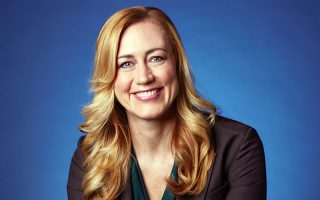 Rachel Vreeman, MD, MS, is a pediatrician, Chair of the Department of Global Health, and Director of the Arnhold Institute for Global Health at the Icahn School of Medicine at Mount Sinai.

 Rose House, MD, MS
 Biraj Karmacharya, PhD, Administrative Director of Dhulikhel Hospital (DH) and Co-Director of AMPATH Nepal, expressed enthusiasm for the Prime Minister’s recognition. “The government of Nepal has always been one of the strongest allies of Dhulikhel Hospital. The visit of PM Oli is a testament to the fact that the government support to the endeavors of DH and this partnership is unwavering. We will continue to harness this unique support to enhance our impact at a larger national level.”
 Rose House, MD, MS
 New York City’s migrant crisis has resulted in children in street situations selling candy and other items in the subway and begging on the streets with their families. Children in street situations rely on the street to live and/or work by themselves or with friends or family. These children often face social, health, and economic disparities and human rights violations. Their presence in NYC requires attention and interventions to ensure their well-being. This necessitates accurate data on these children’s social, economic, and health circumstances. This project will characterize the circumstances of children in street situations aged 5 to 17 years through a field-based survey of these children; a cross-sectional survey of a sample of these children, who will also receive a well child checkup at NYC Health + Hospitals/Elmhurst and be enrolled in NYC Care or Child Health Plus; and in-depth interviews with a sample of parents of these children.

 Elevated blood pressure detected during an emergency department (ED) visit can be a predictor of chronic uncontrolled hypertension. There is variability in hypertension management in the ED. This project will develop a novel intervention that will use electronic health records to identify patients in the ED at NYC Health + Hospitals/Elmhurst with sustained asymptomatic hypertension and provide them a tailored risk communication intervention led by an ED nurse. These patients will be referred to a digitally inclusive remote patient monitoring program that does not require Wi-Fi and is supported by clinical pharmacists for up to 12 months, regardless of insurance status, to further manage their hypertension.


