Mount Sinai Partners With Dhulikhel Hospital in Nepal to Launch Adolescent Health Clinic

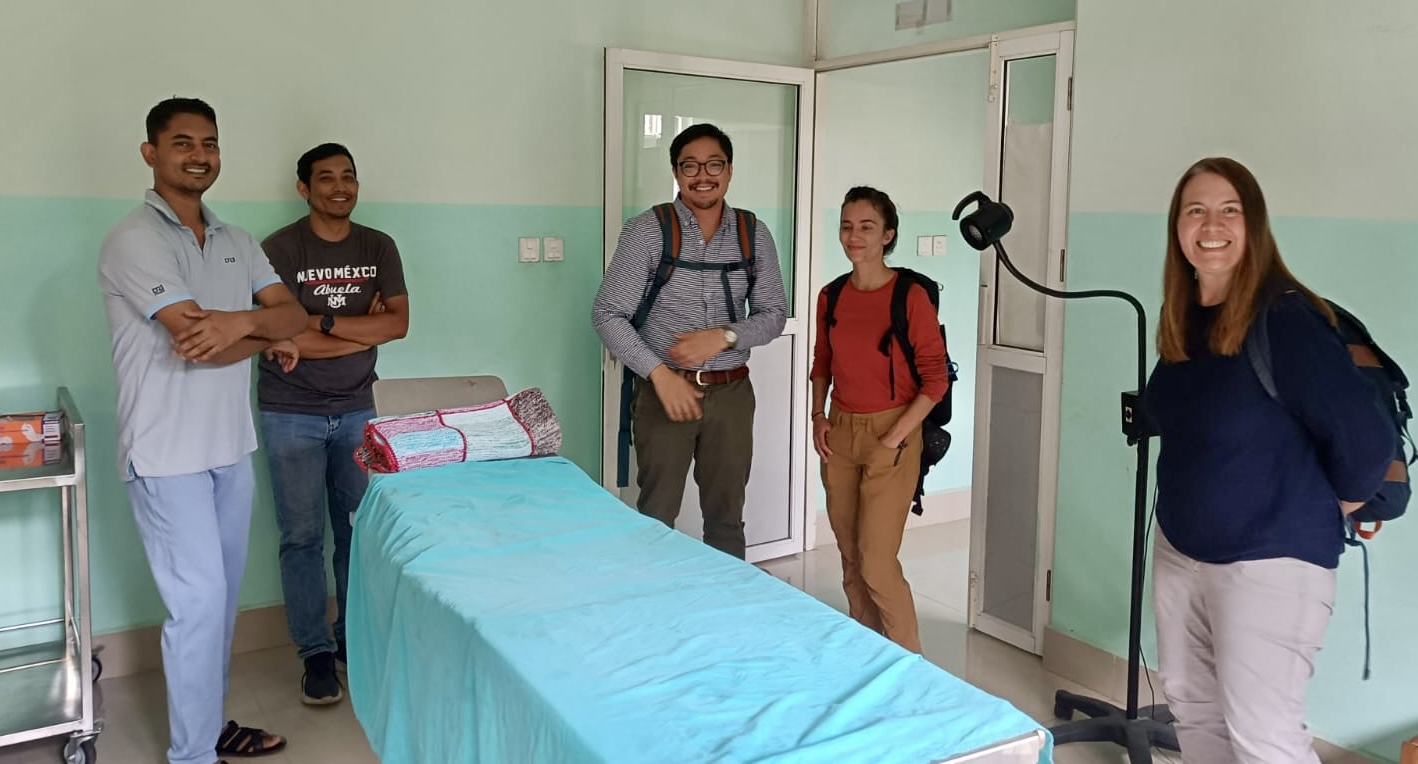
Mary Ott, MD, MA, the Arnhold Institute for Global Health, and partners at the ribbon cutting of the Adolescent Health Clinic at Dhulikhel Hospital in Nepal

Dhulikhel Hospital and the AMPATH Nepal partnership recently launched an Adolescent Health Clinic at the hospital. The clinic was the culmination of months of work and training that brought adolescent health experts from Mount Sinai’s Arnhold Institute for Global Health to Nepal to train and support Nepali health workers in providing world-class care to adolescents.

The clinic provides comprehensive, integrated care every Thursday for young people ages 10-19, aiming to improve access to adolescent-centered health services at Dhulikhel Hospital and its surrounding rural communities. Through a collaborative approach involving doctors, nurses, psychologists, and other health professionals, the clinic offers holistic care across key areas such as reproductive health (including family planning, menstrual health, and adolescent gynecology), mental health, and chronic disease management, with a focus on supporting youth in transitioning to adult care. This integrated approach reflects a deep commitment to meeting the diverse and evolving needs of adolescents in a safe, supportive, and inclusive environment.

AMPATH Nepal is a collaboration of Dhulikhel Hospital and Kathmandu University School of Medical Sciences in Nepal, and the AMPATH Consortium of academic medical centers led by the Arnhold Institute for Global Health at Mount Sinai.

Medical and nursing students trained to roleplay as adolescent patients celebrating the first adolescent clinical training at Dhulikhel Hospital

A Growing Need for Adolescent Care

The need for the adolescent clinic was initially recognized at multiple levels. Dhulikhel Hospital pediatricians saw that their adolescent patients often had mental health issues and other concerns that medical providers weren’t equipped to handle. School nurses in the community shared the concern that they weren’t sure where to refer adolescents, especially young girls, who asked for reproductive health services, or who needed mental health care.

Prithuja Poudyal, MD, a pediatric neurologist and Assistant Professor of Pediatrics at Dhulikhel Hospital, was one of the concerned providers. She noted that her patients with chronic illnesses didn’t have experts to turn to when they needed to navigate the transition to adult medical providers, a transition that can be scary and intimidating. Adolescents may also be seen as “challenging” patients because they are asserting their independence and testing boundaries.

Dr. Poudyal and others saw an urgent need for specialized training for Dhulikhel Hospital providers to help their patients navigate this tricky developmental stage by providing adolescent-friendly services and “transition” care: services that help youth with chronic diseases bridge the transition to making their own medical decisions, without their parents and with new, non-pediatric health care providers. Dr. Poudyal joined several faculty members to advocate for their patients and establish an adolescent clinic at Dhulikhel Hospital. The Arnhold Institute for Global Health provided the expertise, through the Global Youth Health Program, to plan, develop, and launch the clinic.

Dhulikhel Hospital’s First Adolescent Health Training

In March 2024, a team from the Arnhold Institute traveled to Nepal to conduct the first adolescent health provider training at Dhulikhel Hospital. The program began by training youth to roleplay as adolescent patients, followed by two, four-day sessions of provider training. The course combined evidence-based lectures with interactive sessions where clinicians practiced communicating and counseling with the youth in various scenarios. More than 50 health care providers from nine departments across Dhulikhel Hospital participated in the training, gaining practical experience in delivering youth-friendly, respectful, and confidential services.

The Adolescent Clinic Launch

Building on this momentum, Dhulikhel Hospital launched its Adolescent Health Clinic on Thursday, April 24. Many of the faculty and staff members who had participated in the training attended. The youth who had acted as patients were excited to see that the training they helped provide would be put to good use.

Dr. Poudyal and Mary Ott, MD, MA, Associate Director of Global Youth Health Programs at the Arnhold Institute, both spoke at the inauguration, along with Ram Kantha Makaju Shrestha, Dr. med. univ., the founder of Dhulikhel Hospital. In her speech, Dr. Ott said, “We hope to build on young people’s strengths and capacities and involve young people themselves in creating new and innovative solutions. The clinic represents a shift in how Dhulikhel Hospital sees adolescents—not as a big risk, but a huge opportunity.”

Vhari Forsyth, MBBS, MRCPCH, is Program Manager of Adolescent Health Programs at the Arnhold Institute for Global Health.


Hands-on Skills-Based Training for Clinical Providers Advances Adolescent Health Care in Western Kenya

A youth standardized patient working through scenarios with clinicians

To improve health care for youth in western Kenya, the Arnhold Institute for Global Health at Mount Sinai and our AMPATH Kenya partnership held a pivotal clinical training for health care providers who work with adolescents.

The Institute leads the adolescent health initiative of the AMPATH Kenya partnership, a collaboration between Moi Teaching and Referral Hospital and Moi University in Eldoret, Kenya, and a consortium of global academic medical centers. The need for this training was identified at the AMPATH Kenya Youth Summit held in January 2024 and became a strategic priority of the partnership.

Hands-On Skills-Based Learning: About Youth, With Youth

The training, held in Eldoret, Kenya, brought together nurses, doctors, clinical officers, and other health care professionals from Moi Teaching and Referral Hospital, USAID AMPATH Uzima, and community clinics across Western Kenya that frequently interact with adolescent patients. Over five days, clinicians participated in a rigorous 30-hour course focused on developing youth-friendly interviewing skills and counseling techniques, earning continuing education credits upon completion of the course.

Participants of the adolescent health clinical provider training in Eldoret, Kenya

Youth played an essential role in the course’s success. In the days leading up to the course, which was held in January, a group of young people received two days of training to serve as “standardized patients.” These trained youth acted in the role of the adolescent in common clinical scenarios corresponding to the lecture content. This allowed clinical providers to immediately practice the skills they learned in the lecture portion of the training with the youths themselves.

Content lectures were delivered by faculty from the Arnhold Institute, Moi Teaching and Referral Hospital, Moi University, and adolescent medicine experts from East African countries. Topics included the HEADDSS interview (a psychosocial tool for assessing adolescents); motivational interviewing; consent and confidentiality; pubertal assessment, sexual history and family planning; mental health and substance use; and adolescent transitions.

The training paired one hour of skills lab practice session for every hour of content. Each skills lab group included four to five participants, a facilitator, and one youth standardized patient. Clinicians took turns practicing scenarios with the youth standardized patient while the facilitator and other participants provided structured feedback at the end of each scenario. Youth participants also gave feedback on how providers could be more youth friendly.

Scaling Up and Looking Ahead

This training is part of the Arnhold Institute’s broader effort to strengthen adolescent care within our global partnerships.  An upcoming educational quality improvement project will focus on implementing locally the World Health Organization’s guidelines for adolescent health and refining the clinical provider training model to improve providers’ knowledge, attitudes, and confidence in adolescent care.

Additionally, key implementation outcomes of the clinical training—including reach, feasibility, acceptability, and sustainability—will be evaluated to further implement and scale the training.

In March, the Arnhold Institute and our AMPATH Nepal partnership culturally adapted and delivered a similar clinical provider training in advance of launching an adolescent health clinic at Dhulikhel Hospital in Nepal in April. With these early successes, the Arnhold Institute hopes to implement this training across all of the Institute’s partnership sites.


Sakshi Sawarkar is an Associate Researcher at the Arnhold Institute for Global Health, where she supports the Adolescent Health initiatives.  

Fighting Antimicrobial Resistance: How Nepal’s Dhulikhel Hospital Is Leading the Way

Roberto Posada, MD, second from left, attends antibiotic stewardship rounds with Nepali colleagues at Dhulikhel Hospital.

At my first meeting with the staff at Dhulikhel Hospital in Nepal, Suman Shahukhala, a pharmacist, showed me bacteria growing from a urine sample of a patient who came in very ill. The bacteria was E. coli, and it was resistant to all antibiotics available in Nepal except colistin.

Discovered in the 1940s, colistin fell out of favor in the 1980s because it caused dangerous side effects in some people, and by the 1980s there were less risky alternatives available. However, in this case the pharmacist had no option but to advise the treating physicians to use colistin, despite its serious side effects.

The next bacteria he showed me, from a different patient, was even worse. In that case the organism was resistant to all antibiotics available; there was no drug at all that could be used. That patient had little hope of recovery from their serious infection.

Antimicrobial resistance is a growing global crisis, and Nepal is no exception. The misuse and overuse of antibiotics have led to drug-resistant bacteria, making common infections harder to treat. With limited health care infrastructure and increasing infection rates, Nepal faces a serious public health threat from antimicrobial resistance. Luckily, I am privileged to partner with a dedicated team at Dhulikhel Hospital, committed to reducing antibiotic resistance,  and to keeping their patients and communities safer.

Why Antimicrobial Resistance Is a Major Concern

When antibiotics don’t work, infections last longer and become more severe. Conditions like pneumonia and urinary tract infections, which were once easily treatable, are harder to manage, leading to higher mortality rates.

Patients with drug-resistant infections often need extended hospital care, additional tests, and more expensive medications. Many medical procedures rely on antibiotics to prevent infections. When antibiotics fail, the success of surgeries and treatments like chemotherapy is at risk.

These issues put a strain on both families and Nepal’s already overburdened health care system. In addition, drug-resistant bacteria can spread quickly in hospitals and communities, endangering vulnerable groups like newborns, the elderly, and those with weakened immune systems.

How Dhulikhel Hospital Is Combating Antimicrobial Resistance

To tackle this crisis, Dhulikhel Hospital, in collaboration with the Arnhold Institute for Global Health at Mount Sinai and the AMPATH Nepal Partnership, has launched an Antimicrobial Stewardship Program. This initiative ensures responsible antibiotic use to prevent resistance while providing the best possible treatment for patients. Key strategies of the program include providing more resources to clinicians to support their decision-making and creating systems to monitor antibiotic use. The program was created by the team from Dhulikhel Hospital, with Mount Sinai experts joining as advisors as they roll it out.

As a result of the program, one new resource available to Dhulikhel’s clinicians is an antibiogram—a report used at Mount Sinai’s hospitals and many others, that tracks local antibiotic resistance patterns—to help clinicians make informed treatment decisions and monitor changes in resistance over time. Dhulikhel Hospital is also developing guidelines for treating common infections like pneumonia and urinary tract infections. These guidelines help doctors select the most effective antibiotics while avoiding unnecessary use of drugs that we need to save for complex or very serious infections. Regular training sessions are also being held for doctors, nurses, and pharmacists to promote responsible antibiotic prescribing and use.

The hospital also has started an antibiotic stewardship committee that conducts weekly hospital rounds. This team of experts—including doctors, nurses, pharmacists, and microbiologists— helps physicians choose the right antibiotic, in the right dose, for the right duration, preventing unnecessary antibiotic use and slowing down resistance development.

To monitor and regulate antibiotic use, the hospital now classifies certain powerful antibiotics as “restricted,” meaning they require approval before use. This ensures these lifesaving drugs are only prescribed when absolutely necessary, reducing the risk of resistance.

The Team Behind the Initiative

The Antimicrobial Stewardship Program at Dhulikhel Hospital was established by Prakash Sapkota, MD, and is led by Nabin Simkhada, MD, both from the Department of Internal Medicine. The team includes specialists from anesthesiology, obstetrics and gynecology, pharmacy, microbiology, and nursing. Sujan Pathak, MD, serves as the research assistant for the project. Key collaborators from Mount Sinai include myself, Roberto Posada, MD, and my colleague Mary Boyle, MD, MPH. We are both pediatric infectious disease specialists.

Why This Matters

Antimicrobial resistance is a serious threat, but with immediate action, we can slow its spread and preserve the effectiveness of lifesaving antibiotics. The Antimicrobial Stewardship Program at Dhulikhel Hospital is a crucial step toward responsible antibiotic use, improving patient outcomes, and safeguarding future generations against untreatable infections.

Roberto Posada, MD, is Professor of Pediatrics, Medical Education, and Global Health at the Icahn School of Medicine at Mount Sinai.


Documentary Premiere: Inside A National Healthcare Collaboration

A child receives a health screening in school in Guyana.

The Arnhold Institute for Global Health is proud to present Inside a National Healthcare Collaboration, a compelling documentary highlighting Mount Sinai’s groundbreaking partnership with the Government of Guyana and Hess Corporation to strengthen the health system across Guyana.

The film’s trailer premiered during a milestone signing ceremony in Georgetown, Guyana, where His Excellency Dr. Irfaan Ali, President of Guyana, announced a five-year extension of the National Healthcare Initiative. This renewed commitment aims to transform Guyana’s public health system with world-class health care services accessible to all citizens, especially those in vulnerable communities. Following the ceremony, President Ali officially launched the full documentary.

Inside a National Health Collaboration chronicles the first phase of this ambitious effort—from the rollout of school-based health screenings to the launch of a cutting-edge pathology lab that has significantly reduced the time it takes for patients to receive a diagnosis and begin lifesaving treatment. The film also highlights advancements in community-based diabetes care, improvements in the quality of care at the country’s largest hospital, and progress toward developing new digital health systems, including a national electronic health record system.

Produced by Mount Sinai, the documentary features interviews with President Ali, Mount Sinai experts—including from the Arnhold Institute for Global Health and Mount Sinai International—along with Guyanese partners. It tells the human stories behind this health transformation and offers a powerful look at how the collaboration is reshaping health care in Guyana and improving lives for generations to come.

Project ECHO Launched in Nepal to Advance Emergency Care in Rural Areas

Rose House, MD, MS, right, and her team conduct a needs assessment at one of the rural health facilities participating in Project ECHO.

Our AMPATH Nepal partnership has launched a new program to improve access to emergency care in remote regions of Nepal. Through a transformative model called Project ECHO (short for “Extension for Community Healthcare Outcomes”), Nepal’s health workers will learn from and collaborate with experts in emergency medicine (EM) from around the globe.

AMPATH Nepal includes Dhulikhel Hospital, Kathmandu University School of Medical Sciences, and Mount Sinai as the lead partner for the AMPATH Consortium of 18 universities around the world.

The Need to Grow Emergency Medicine Capacity in Nepal

Though some general practitioners in Nepal receive emergency care training as part of their residency, there is a gap when it comes to formal, specialized EM education, especially in rural areas. Health care providers often lack the training and experience to effectively manage emergency situations. Rural areas face additional hurdles, like difficult terrain, long travel times to referral hospitals, and financial constraints that hinder patients from accessing advanced care. As a result, health care workers must often make critical decisions with limited resources, sometimes with little support or guidance from more experienced professionals. Through Project ECHO, AMPATH Nepal will start to fill this gap.

Bridging the Health Care Gap with Project ECHO

Project ECHO is about breaking down geographical and resource-based barriers to expert medical knowledge. It was born in 2003 at the University of New Mexico Health Sciences Center with a simple idea: empower health care providers in underserved communities by connecting them with expert teams through videoconferencing. Providers in rural or underserved regions—referred to as “spokes”—are linked with specialist teams, or “hubs,” located in regional, national, or even global centers. As a platform for long-term continuous learning, case discussions, and expert consultations, ECHO helps bridge gaps in education, reduce isolation of rural health care workers, and improve patient care.

The ECHO model has reached more than 900 partners and 1.5 million learners across more than 190 countries, improving provider knowledge, patient outcomes, and cost savings. Project ECHO is a World Health Organization collaborating partner to enhance community emergency preparedness and response globally.

Launching the Nepali EM ECHO

Our first step in launching an EM ECHO involved a comprehensive needs assessment. By engaging with rural communities and health care providers, we identified the most common and complex cases encountered. The needs assessment also evaluated local resources, internet connectivity, and the existing health care protocols to ensure the model’s success in rural settings.

Based on these needs, the capacity of the outreach centers, and desired topics of discussion, we tailored our ECHO education sessions to local realities, focusing on the topics that will have the greatest impact. The curriculum will focus on urgent topics and foundational EM skills, including critical areas such as airway management, breathing, and circulation (the ABCs of emergency care).

Local and International Expert Engagement

A key aspect of this initiative is the involvement of both local and international emergency medicine experts. Local specialists from Dhulikhel Hospital play a crucial role in leading and guiding the ECHO sessions. Faculty from the Icahn School of Medicine at Mount Sinai are also lending their expertise to further enhance the program’s impact.

A Critical Step Forward for Nepal’s Health Care System

The launch of Project ECHO for Emergency Medicine in Nepal represents a critical step forward in the country’s health care development. By leveraging technology and expert collaboration, we can overcome many of the challenges facing rural health care providers, empowering them to deliver better care in even the most remote areas. This initiative has the potential not only to improve patient outcomes but also to strengthen the capacity of Nepal’s entire health care system, serving as a global model to address challenges in emergency medicine training and education.

Rose House, MD, MS
AMPATH Nepal Partnership Director, Arnhold Institute for Global Health
Associate Professor of Emergency Medicine, Pediatrics and Global Health

Icahn School of Medicine at Mount Sinai


A Note From Dr. Rachel Vreeman, Chair of Global Health

Rachel Vreeman, MD, MS, with the leadership of the Rafiki Centre of Excellence in Adolescent Health in Eldoret, Kenya.

Today, I’m writing with a heavy heart. Several of you have encouraged me to share directly about how current events are impacting our global health work, and I want to explain what that looks like.

Who I Am and What I Do

While it is my privilege to lead the Department of Global Health at Mount Sinai, I’m also a pediatrician specializing in global HIV care. I’ve spent the last 20 years working to improve care for children living with HIV.

  • I’ve had the difficult job of delivering the news to countless families that their children have HIV, and I’ve witnessed too many lives lost.
  • Most of my work has centered in the AMPATH Kenya partnership, where Mount Sinai partners with a Kenyan medical school and hospital system and the Kenya Ministry of Health.
  • Together, we built an HIV care system that serves over 200,000 people at 300 clinics across Kenya.
  • This system was initially made possible through USAID funding.

Dr. Vreeman on the pediatric ward of Moi Teaching and Referral Hospital in Eldoret, Kenya, in 2004.

The Miracles We’ve Seen

Until January, this system allowed us to witness miracles every day. When I first started, I saw mostly babies in HIV clinics because children with HIV typically didn’t survive past age 3 or 4 without treatment.

  • Today, our clinics are full of adolescents and young adults who have grown up with HIV treatment.
  • These young people are now heading to college, starting careers, and building families of their own.

One of the girls I’ve cared for over 20 years is now a nurse in our largest HIV clinic. I could share thousands of success stories like these, all of which bring me immense joy and pride.

The Impact of the USAID Funding Freeze

However, since January, everything changed.

  • The freeze on USAID funding has shut down most of the health care system.
  • We cannot continue to give life-saving medication.
  • My WhatsApp is flooded with messages from young adults in Kenya who are now asking, “How will we have a future without our medications? Where is our hope?”

These messages break my heart, and I’m struggling to provide answers.

The Urgent Need

We’ve been working closely with the Kenyan government to find ways to sustain care, but having this system dismantled overnight is a nightmare.

  • We estimate there is a $5 million gap to sustain the most critical health care services over the next year.

How You Can Help

I know this is a lot to ask, but if you are able to contribute anything at all to our emergency fund, it would mean the world to me – and to the thousands of lives we are trying to save.

  • Donations can be made through the emergency fund set up at the Arnhold Institute for Global Health at Mount Sinai here.

Thank you so much for considering this urgent request. Your support can make a tremendous difference.

Rachel Vreeman, MD, MS, is a pediatrician, Chair of the Department of Global Health, and Director of the Arnhold Institute for Global Health at the Icahn School of Medicine at Mount Sinai.